
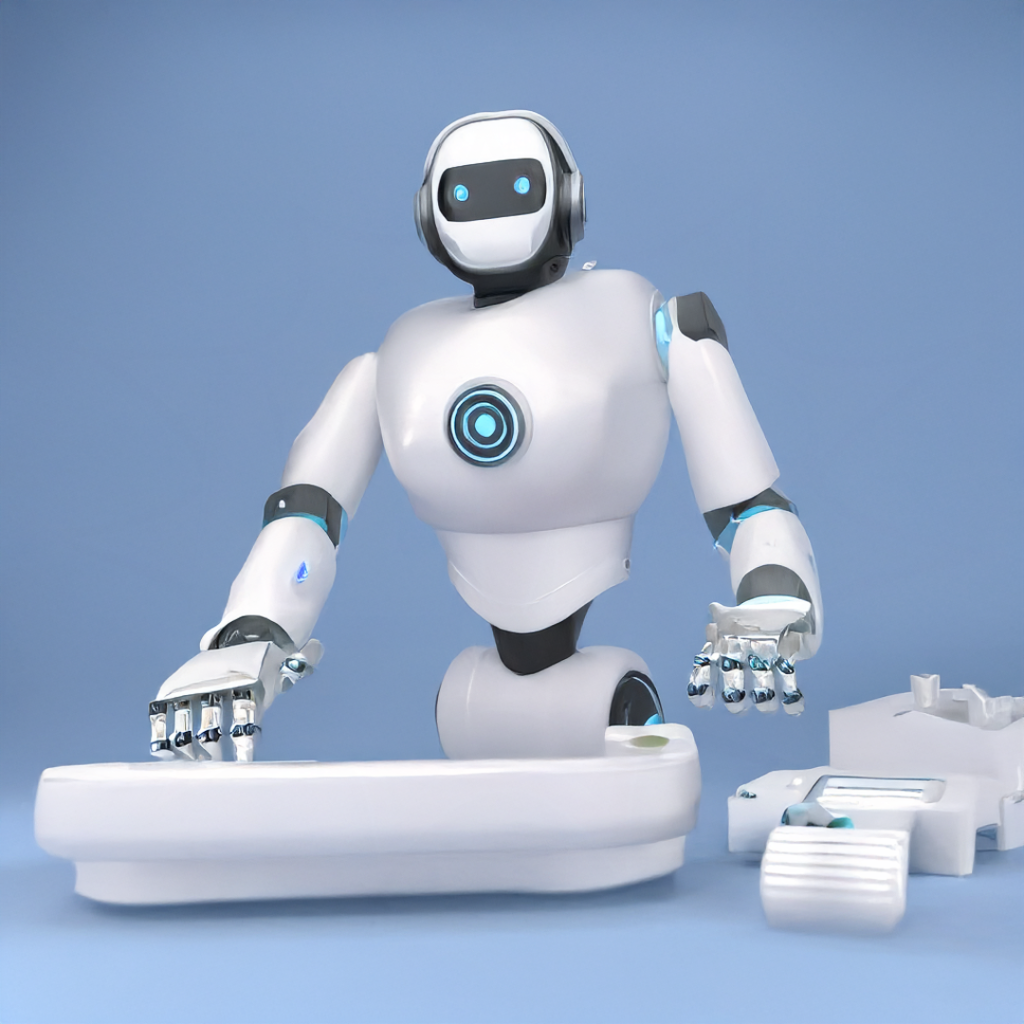
Introduction: The Future is Automated
Imagine a world where the repetitive, time-consuming tasks in your business simply… disappear. That’s not a dream from a sci-fi movie; it’s the reality being shaped by **AI automations**. In today’s fast-paced business landscape, staying competitive means working smarter, not just harder. Artificial intelligence (AI) is no longer just for tech giants; it’s becoming an accessible, powerful tool for businesses of all sizes to streamline operations, reduce errors, and free up valuable human potential. This article will explore how **AI automations** can transform your company, from understanding what they are to practical steps for implementation and the best **workflow automation tools** to consider.
What Exactly Are AI Automations?
At its core, an **AI automation** combines the power of artificial intelligence with the concept of automation. Automation, by itself, means getting machines or software to perform tasks automatically, without constant human input. Think of a factory assembly line or a simple email auto-responder. When AI is added to the mix, these automations become “smart.” AI allows systems to learn from data, make decisions, recognize patterns, and even adapt over time. This means **AI automations** can handle more complex, variable, and nuanced tasks than traditional automation, often mimicking human intelligence in specific areas to drive efficiency and accuracy.
Why Your Business Needs AI Automations Now
The benefits of embracing **business automation with AI** are compelling and immediate. Firstly, efficiency skyrockets. Tasks that once took hours or days can be completed in minutes, freeing up your team for more strategic work. This directly leads to significant cost savings, as you optimize resource allocation and reduce the need for manual labor in routine tasks. Accuracy also improves dramatically; AI systems are less prone to human error, especially when dealing with large volumes of data. Beyond the numbers, **AI automations** also boost employee morale. By removing monotonous tasks like data entry, scheduling, or report generation, your staff can focus on creative problem-solving, customer interaction, and innovation – the aspects of their job that truly add value and provide satisfaction. This translates to higher productivity, better service delivery, and a stronger competitive edge in the market. In essence, it’s about making your business operations smoother, smarter, and more sustainable.
Common Areas for Business Automation with AI
Where can you apply **business automation with AI**? The possibilities are vast, touching almost every department.
* **Customer Service:** AI-powered chatbots can handle routine inquiries, provide instant support 24/7, and guide customers to relevant information, reserving human agents for complex issues.
* **Marketing & Sales:** AI can analyze customer data to personalize marketing campaigns, identify sales leads, automate email sequences, and even predict purchasing behavior.
* **Data Entry & Management:** Say goodbye to manual input. AI can extract information from documents, process invoices, and update databases with incredible speed and accuracy.
* **Human Resources:** From screening resumes and scheduling interviews to onboarding new hires and answering HR FAQs, AI can streamline many administrative HR functions.
* **Finance & Accounting:** Automate invoice processing, expense tracking, fraud detection, and financial reporting, reducing errors and saving time.
These examples highlight how **AI automations** aren’t just about cutting costs; they’re about creating a more agile, responsive, and intelligent business.
Exploring Workflow Automation Tools
To implement **AI automations**, businesses need the right **workflow automation tools**. These tools vary widely in their capabilities and applications. Some are standalone software solutions, while others are integrated platforms designed to connect various applications.
* **Robotic Process Automation (RPA) Tools:** These tools use “bots” to mimic human actions in software interfaces, automating repetitive, rule-based tasks across different applications without requiring complex integrations.
* **Intelligent Process Automation (IPA) Platforms:** Combining RPA with AI capabilities like machine learning and natural language processing, IPA tools can handle more complex, unstructured data and make decisions.
* **CRM (Customer Relationship Management) Systems with AI:** Platforms like Salesforce often include AI features (e.g., Einstein AI) to automate sales forecasts, service recommendations, and marketing insights.
* **Chatbot Development Platforms:** Tools like ManyChat or Dialogflow allow businesses to build and deploy AI-powered chatbots for customer interaction.
Choosing the right **workflow automation tools** depends on your specific needs, existing systems, and the complexity of the tasks you want to automate. Many of these tools are designed to facilitate effective **AI task automation** across various business functions.
Real-World Examples of AI Task Automation
Let’s look at some concrete examples of **AI task automation** in action:
* **Automated Email Sorting and Response:** An AI system can learn to categorize incoming emails (e.g., support requests, sales inquiries, spam) and even draft personalized responses based on content, requiring human review only for complex cases.
* **Invoice Processing:** Instead of manually entering data from invoices, AI-powered OCR (Optical Character Recognition) can extract relevant information like vendor name, amount, and due date, then automatically enter it into accounting software and flag discrepancies.
* **Social Media Monitoring and Engagement:** AI tools can monitor social media for brand mentions, analyze sentiment, and even schedule replies or escalate urgent issues to human teams.
* **Personalized Product Recommendations:** E-commerce sites use AI to analyze browsing and purchase history, then suggest products relevant to each individual customer, significantly boosting sales.
* **Automated Document Generation:** AI can populate templates with specific data to create contracts, reports, or personalized letters much faster than manual methods.
These examples showcase how **AI task automation** can free up employees for higher-value activities and significantly enhance operational flow.
Getting Started with AI Automation
Diving into **AI automations** doesn’t have to be overwhelming. Start small. Identify repetitive, high-volume tasks that are prone to human error and don’t require complex human judgment. Begin with one or two pilot projects to understand the capabilities and challenges. Research various **workflow automation tools** and consider consulting with an expert if needed. Ensure your team is involved and understands the benefits; AI is meant to assist them, not replace them entirely. With careful planning and a phased approach, you can successfully integrate **business automation with AI** and unlock a new level of operational excellence. It’s about finding the right **AI task automation** opportunities that deliver the most impact with the least initial effort.
Frequently Asked Questions
Q: Is AI automation only for large companies?
A: Not at all! While large enterprises use it extensively, many affordable and user-friendly **workflow automation tools** are now available for small and medium-sized businesses, making **AI automations** accessible to everyone. It’s about finding solutions that fit your scale.
Q: Will AI automations replace human jobs?
A: The primary goal of **AI automations** is to automate routine, repetitive tasks, thereby freeing up human employees to focus on more creative, strategic, and interpersonal work. It’s often about augmentation – empowering people – rather than wholesale replacement.
Q: How difficult is it to implement AI automation?
A: The difficulty varies. Simple **AI task automation** can be straightforward with off-the-shelf tools. More complex integrations may require planning and potentially expert assistance, but starting with small, clear projects can simplify the process significantly and build internal expertise.
Conclusion
The future of business is undeniably intertwined with **AI automations**. By strategically implementing **business automation with AI** and leveraging powerful **workflow automation tools**, companies can achieve unprecedented levels of efficiency, accuracy, and innovation. Don’t be left behind; embrace the power of **AI task automation** to streamline operations, empower your team, and set your business on a path toward sustained growth and success. The time to automate intelligently is now.