
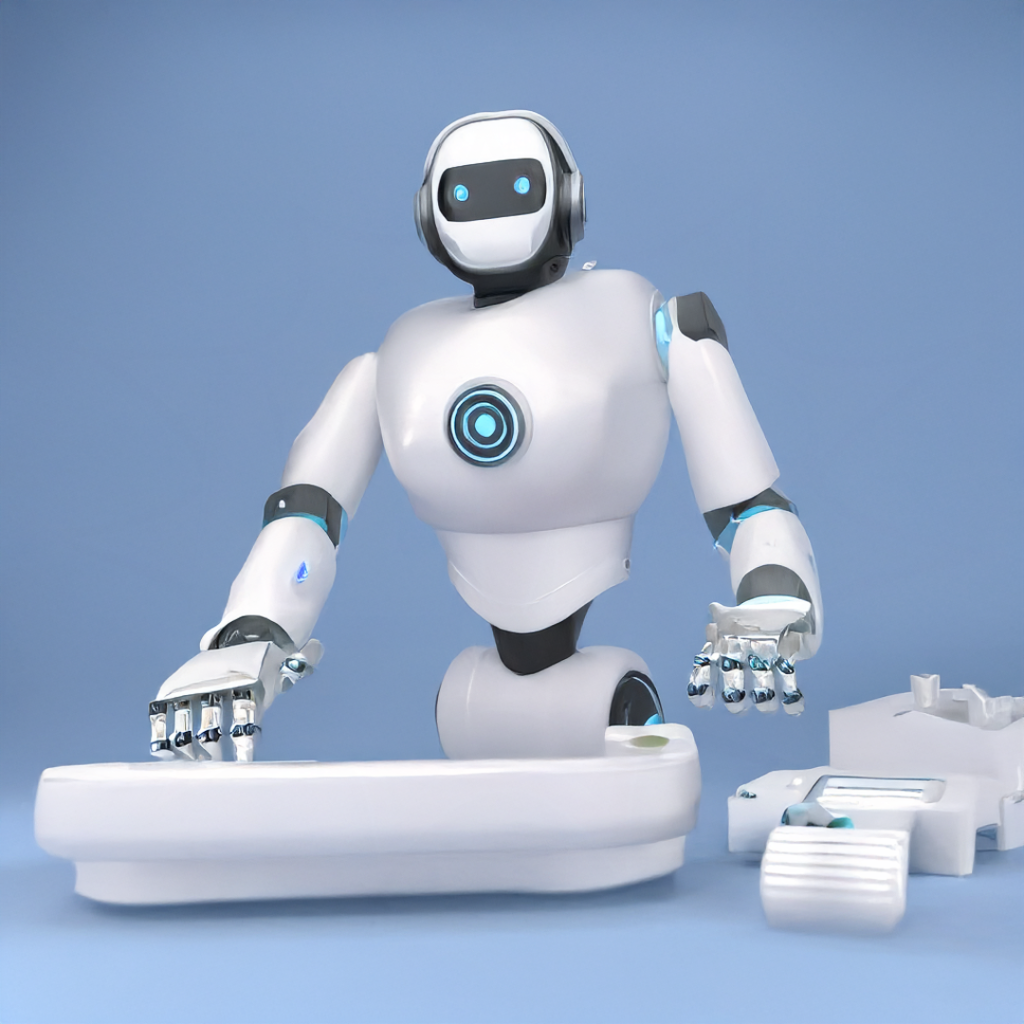
Introduction: What Are AI Automations and Why Should You Care?
Imagine a world where the repetitive, time-consuming parts of your workday simply disappear. Tasks like sorting emails, scheduling meetings, or generating reports are handled without you lifting a finger. This isn’t science fiction; it’s the reality of AI automations. In simple terms, AI automations use artificial intelligence to perform tasks and processes that would normally require human effort. They’re designed to make your work life easier, faster, and more efficient.
For businesses of all sizes, understanding and implementing these tools isn’t just a trend—it’s becoming a necessity. From small startups to large corporations, companies are discovering the incredible power of letting AI handle the mundane, freeing up their human teams for more creative, strategic, and impactful work. This article will break down what AI automations are, how they benefit your business, explore some powerful workflow automation tools, and show you practical examples of AI task automation in action.
The Power of Business Automation with AI
Business automation with AI isn’t just about replacing manual labor; it’s about unlocking new levels of productivity and accuracy that were previously unattainable. When you integrate AI into your business processes, you’re not just automating a single task; you’re often optimizing entire workflows. Think about the cascade effect: one automated step can streamline the next, and the next, leading to a significant overall improvement.
One of the biggest advantages is consistency. Humans can make mistakes, get tired, or overlook details. AI, on the other hand, performs tasks with unwavering precision, every single time. This means fewer errors, higher quality output, and a more reliable operational flow. Moreover, AI can process vast amounts of data much faster than any human, identifying patterns and insights that can inform better business decisions.
By embracing business automation with AI, companies can drastically reduce operational costs. Less time spent on manual tasks means employees can focus on value-adding activities, ultimately leading to higher revenue and a more competitive edge in the market. It’s about working smarter, not just harder.
Key Benefits of Implementing AI Automations
The advantages of bringing AI automations into your business are numerous and impactful:
* **Increased Efficiency and Speed:** AI can complete tasks in seconds that might take a human hours. This speed not only saves time but also allows your business to respond faster to market changes and customer demands. From processing invoices to onboarding new clients, AI speeds up the entire process.
* **Cost Reduction:** By automating repetitive tasks, you reduce the need for extensive manual labor, lowering staffing costs in certain areas and allowing existing staff to be redeployed to more strategic roles. Fewer errors also mean less time and money spent on corrections.
* **Enhanced Accuracy and Reduced Errors:** AI systems follow rules precisely and aren’t prone to human error, fatigue, or distraction. This leads to higher accuracy in data entry, calculations, and decision-making processes.
* **Better Customer Experience:** AI-powered chatbots can provide instant 24/7 customer support, resolving common queries quickly and efficiently. This improves customer satisfaction and frees up human agents for more complex issues.
* **Scalability:** AI automations can easily scale up or down to meet fluctuating business demands without requiring significant additional human resources. This flexibility is crucial for growth and adapting to changing market conditions.
* **Improved Employee Satisfaction:** By taking over dull, repetitive tasks, AI frees employees to focus on more creative, challenging, and rewarding work. This can lead to higher job satisfaction and lower turnover rates.
Practical Examples of AI Task Automation in Action
AI task automation is already transforming various departments within businesses. Here are some real-world examples:
* **Customer Service:** AI-powered chatbots and virtual assistants handle initial customer inquiries, provide instant answers to FAQs, guide users through processes, and even qualify leads. This significantly reduces response times and workload for human support teams.
* **Data Entry and Processing:** AI can automatically extract information from documents, such as invoices, receipts, and forms, and enter it into relevant systems. This eliminates tedious manual data entry, reducing errors and saving countless hours.
* **Marketing and Sales:** AI automates email marketing campaigns, personalizes content recommendations for website visitors, analyzes customer behavior to predict buying patterns, and even automates lead scoring to help sales teams prioritize.
* **HR and Recruitment:** AI automates resume screening, schedules interviews, and answers candidate queries, streamlining the hiring process. For existing employees, AI can help with onboarding processes and managing routine HR requests.
* **Finance and Accounting:** AI automates expense reporting, reconciles bank statements, processes invoices, and identifies potential fraud by flagging unusual transactions. This enhances financial accuracy and security.
* **IT Operations:** AI monitors system performance, detects anomalies, automates routine maintenance tasks, and even predicts potential system failures before they occur, ensuring smoother IT operations.
Exploring Powerful Workflow Automation Tools Driven by AI
The market is rich with workflow automation tools that leverage AI to streamline operations. These tools often integrate with existing software, creating a seamless ecosystem for your business processes. Here are a few categories and examples:
* **Robotic Process Automation (RPA) Platforms:** RPA tools are designed to mimic human actions when interacting with digital systems. They can open applications, log in, copy and paste data, and perform repetitive tasks across various software. When combined with AI, RPA bots become ‘smarter,’ able to handle more complex scenarios, unstructured data, and even learn from interactions. Examples include UiPath, Automation Anywhere, and Blue Prism.
* **Intelligent Document Processing (IDP) Solutions:** These tools use AI, machine learning, and optical character recognition (OCR) to extract, categorize, and process data from various document types (invoices, contracts, forms) with high accuracy. ABBYY Vantage and Hyperscience are leading examples.
* **AI-Powered Chatbots and Virtual Assistants:** Platforms like Intercom, Drift, and HubSpot often include AI capabilities for their chatbots, allowing them to understand natural language, learn from conversations, and provide increasingly sophisticated support. Tools like Google Dialogflow enable custom bot development.
* **Integration Platforms as a Service (iPaaS):** Platforms like Zapier, Make (formerly Integromat), and Workato allow you to connect different applications and automate workflows between them. While not purely AI, they increasingly incorporate AI features for tasks like natural language processing, data transformation, and predictive analytics to enhance the automation logic.
* **Business Process Management (BPM) Suites with AI:** Modern BPM software, such as Appian or Pegasystems, integrates AI to automate decision-making, optimize process flows, and provide predictive insights, moving beyond simple task automation to intelligent process orchestration.
When choosing workflow automation tools, consider their ease of use, integration capabilities, scalability, and the specific AI features that align with your business needs. Many offer trial versions, allowing you to test their impact before full commitment.
Getting Started with AI Automations: A Simple Roadmap
Implementing AI automations might seem daunting, but it doesn’t have to be. Here’s a simple roadmap to get you started:
1. **Identify Repetitive Tasks:** Start by listing all the tasks that are time-consuming, prone to error, and don’t require human creativity or complex decision-making. These are prime candidates for AI task automation.
2. **Choose a Starting Point:** Don’t try to automate everything at once. Pick one or two high-impact areas where automation can deliver quick wins, like customer support FAQs or data entry for invoices.
3. **Research Workflow Automation Tools:** Look for tools that specialize in your chosen area and integrate well with your existing systems. Many platforms offer free trials or freemium models.
4. **Start Small and Test:** Implement your chosen automation on a small scale. Monitor its performance, gather feedback, and make adjustments. Learning and iterating are key.
5. **Train Your Team:** Educate your employees about the benefits of AI automations and how they will interact with the new systems. Emphasize that AI is there to assist them, not replace them entirely.
6. **Scale Gradually:** Once you’ve seen success in one area, gradually expand your AI automation efforts to other parts of your business. Continue to monitor and optimize as you go.
Remember, the goal is to make your business more efficient and free up your team for more valuable work. Approach AI automation as an ongoing journey of improvement.
The Future is Automated: Embracing AI for Growth
The landscape of business is rapidly evolving, and AI automations are at the forefront of this transformation. What might seem like a futuristic concept is already a daily reality for many successful companies. By intelligently deploying business automation with AI, you’re not just saving time and money; you’re building a more resilient, agile, and competitive organization.
The future will see even more sophisticated AI task automation, with systems becoming more adaptive, predictive, and capable of handling increasingly complex scenarios. Workflow automation tools will become even more intuitive and integrated, making it easier for businesses of all sizes to harness their power. Those who embrace these changes will be better positioned for sustainable growth and innovation.
Don’t let the complexity of AI deter you. Start with simple steps, focus on clear benefits, and you’ll soon discover the profound impact that intelligent automation can have on your business’s success.
Frequently Asked Questions
What is the main difference between traditional automation and AI automation?
Traditional automation follows predefined rules to execute repetitive tasks. AI automation, on the other hand, uses artificial intelligence to learn, adapt, and make decisions based on data, allowing it to handle more complex and unstructured tasks that require some level of ‘intelligence’.
Is AI automation only for large corporations?
Absolutely not! While large corporations can certainly benefit, many AI automation tools are now designed to be user-friendly and affordable for small and medium-sized businesses. There are scalable solutions for almost any budget and need, making AI accessible to all.
Will AI automations replace human jobs?
The goal of AI automations is typically to augment human capabilities, not replace them entirely. AI handles the repetitive, mundane tasks, freeing up human employees to focus on more creative, strategic, and interpersonal work that requires critical thinking, empathy, and complex problem-solving. It often shifts job roles rather than eliminating them.
How secure are AI automation systems with sensitive business data?
Security is a critical concern for AI automation providers. Reputable workflow automation tools and AI systems typically employ robust security measures, including encryption, access controls, and compliance with industry standards. However, it’s essential for businesses to vet providers and ensure their security protocols meet required standards.
Conclusion
AI automations are no longer a luxury but a powerful catalyst for efficiency and growth in today’s business world. From streamlining mundane tasks to revolutionizing entire workflows, the benefits of business automation with AI are clear: increased efficiency, cost savings, greater accuracy, and happier employees. By exploring the right workflow automation tools and strategically implementing AI task automation, any business can unlock significant potential. Start small, learn continuously, and embrace the intelligent future that AI brings to your operations.