
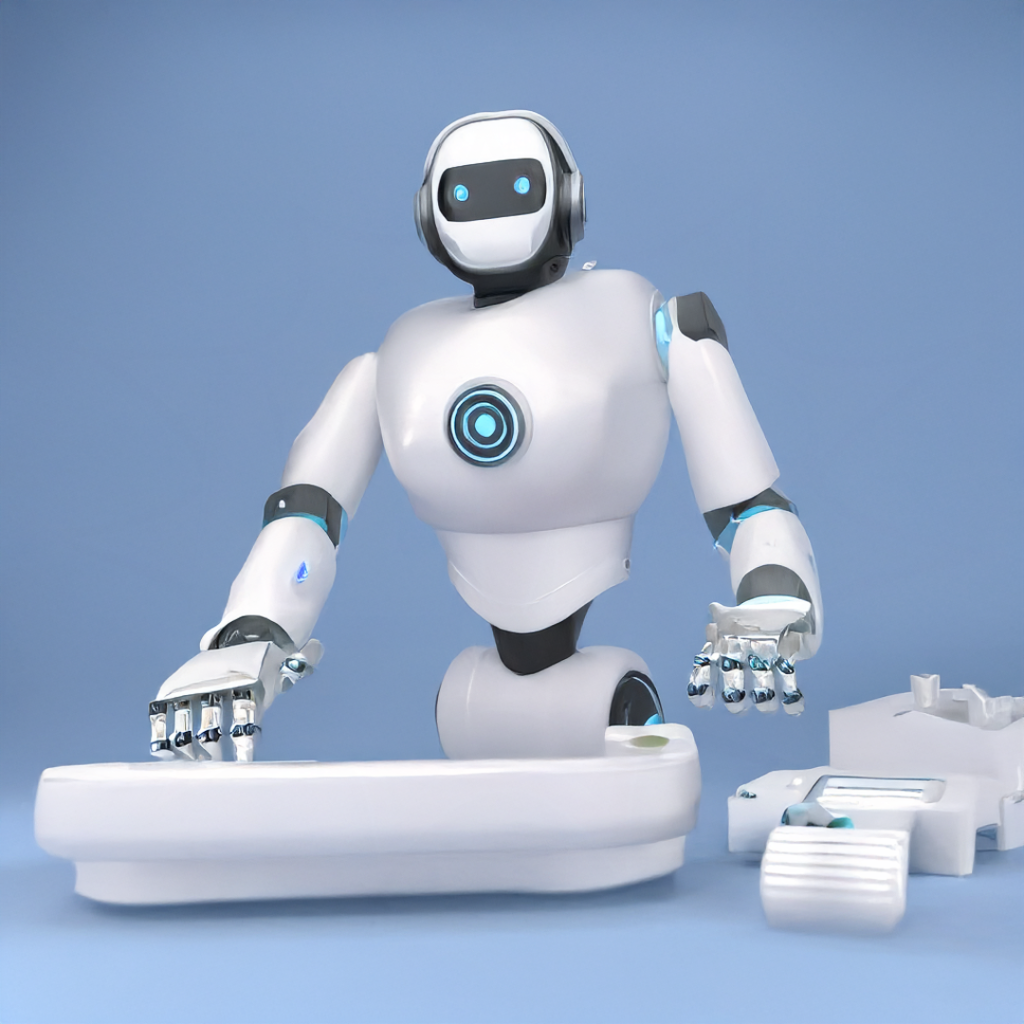
Unlock Efficiency: The Power of AI Automations
Imagine a world where the boring, repetitive parts of your workday simply… disappear. This isn’t science fiction anymore; it’s the reality brought by **AI automations**. For businesses everywhere, big or small, AI is changing the game by taking over tasks that used to eat up valuable time and resources. Instead of spending hours on data entry, scheduling, or answering common customer questions, imagine if a smart system could handle it all. That’s the core promise of AI automation: making your business run smoother, faster, and smarter. In this guide, we’ll break down what AI automations are, how they benefit your business, and how you can start using powerful **workflow automation tools** to simplify your daily operations and boost productivity. Get ready to learn how to put AI to work for you.
What Exactly Are AI Automations?
At its heart, AI automation means using artificial intelligence to perform tasks and processes that typically require human effort. Think of it as teaching a super-smart robot to do certain jobs for you. Unlike traditional automation, which follows strict rules, **AI automations** can learn, adapt, and even make decisions based on data. This makes them incredibly powerful for handling complex or varied tasks.
For example, instead of just moving a file from folder A to folder B (traditional automation), AI automation could read the content of the file, understand what it’s about, decide which department needs to see it, and then send it to the right person, even if the file type changes. It’s about more than just speed; it’s about smart, intelligent action.
These automations can range from simple **AI task automation**, like sorting emails, to complex systems that manage entire customer support cycles. The goal is always the same: to reduce manual work, minimize errors, and free up human employees to focus on creative, strategic, and more fulfilling work.
Why Your Business Needs Business Automation with AI
The reasons to embrace **business automation with AI** are compelling. It’s not just about keeping up with technology; it’s about gaining a significant competitive edge and fundamentally improving how your business operates. Let’s look at the key benefits:
* **Massive Time Savings**: Repetitive tasks consume countless hours. AI automations can perform these tasks 24/7 without breaks, dramatically speeding up processes. Imagine how much more your team could achieve if they weren’t bogged down by administrative chores.
* **Reduced Costs**: By automating tasks, you can reduce the need for manual labor in certain areas, leading to significant cost savings over time. It also means fewer errors, which in turn reduces the cost of correcting mistakes.
* **Fewer Errors, Higher Accuracy**: Humans make mistakes; it’s natural. AI systems, once properly configured, perform tasks with consistent accuracy. This means fewer typos in data, correct calculations, and precise execution every time, leading to higher quality outputs and happier customers.
* **Improved Efficiency and Productivity**: With AI handling the routine, your human employees can focus on high-value activities that require creativity, critical thinking, and human interaction. This boosts overall team productivity and allows your business to innovate and grow.
* **Better Customer Experience**: AI-powered chatbots can provide instant customer support, answering common questions and guiding users 24/7. This immediate response improves customer satisfaction and frees up your support staff for more complex issues.
* **Scalability**: As your business grows, manual processes can become bottlenecks. AI automations can easily scale up to handle increased workloads without needing proportional increases in human staff, making growth smoother and more sustainable.
Implementing **business automation with AI** is about making your operations leaner, smarter, and more ready for the future. It’s about working smarter, not just harder.
Real-World Examples of AI Task Automation in Action
To truly understand the power of **AI task automation**, let’s look at some practical examples you might already encounter or could easily implement in your business:
1. **Customer Service Chatbots**: These AI-powered bots can handle a high volume of customer inquiries instantly. They can answer FAQs, guide customers through troubleshooting steps, and even process simple requests like password resets. If an issue is too complex, the bot can seamlessly hand it off to a human agent, providing them with all the context.
2. **Data Entry and Processing**: AI can read invoices, forms, and other documents, extract relevant information, and input it into your systems (like CRM or accounting software) with incredible speed and accuracy. This eliminates the tedious and error-prone manual data entry.
3. **Email Management and Sorting**: Imagine AI automatically sorting your incoming emails, prioritizing urgent messages, flagging sales leads, and even drafting responses to common inquiries. This saves valuable time for sales, support, and administrative teams.
4. **Recruitment and HR**: AI can help screen resumes, identify qualified candidates based on specific criteria, and even schedule interviews. This significantly streamlines the hiring process, allowing HR professionals to focus on human connection and strategic talent acquisition.
5. **Marketing and Content Generation**: AI tools can help analyze market trends, personalize email campaigns, suggest content topics, and even generate basic draft content for social media posts or product descriptions. This boosts marketing efficiency and relevance.
6. **Financial Operations**: AI can automate invoice processing, reconcile accounts, and even flag suspicious transactions for fraud detection. This brings greater accuracy and security to your financial workflows.
These examples show that **AI task automation** isn’t just for tech giants; it’s accessible and beneficial for a wide range of business functions.
Exploring Powerful Workflow Automation Tools
The magic behind successful **AI automations** often lies in the quality of the **workflow automation tools** you use. These tools are the engines that power your automated processes, connecting different applications and performing tasks based on defined triggers and actions. They come in many forms, from simple ‘if this, then that’ connectors to sophisticated platforms:
* **Robotic Process Automation (RPA) Tools**: RPA uses software robots (‘bots’) to mimic human actions when interacting with digital systems. These bots can open applications, log in, copy and paste data, and perform repetitive tasks across various software programs, just like a human would, but much faster and without errors. They are excellent for automating rule-based, high-volume tasks.
* **Integration Platform as a Service (iPaaS)**: Tools like Zapier, Make (formerly Integromat), and Workato specialize in connecting different cloud-based applications. They allow you to create automated workflows that pass data and trigger actions between apps you already use, such as your CRM, email marketing software, and project management tools. This creates seamless data flow across your entire digital ecosystem.
* **Business Process Management (BPM) Suites**: These comprehensive platforms help businesses map, analyze, improve, and automate complex end-to-end processes. They often include features for form design, rule engines, and analytics, providing a holistic approach to **business automation with AI**.
* **AI-Powered Low-Code/No-Code Platforms**: These tools make it easier for people without deep programming knowledge to build applications and automate workflows. By using visual interfaces and pre-built components, you can quickly create custom solutions powered by AI, democratizing access to automation.
Choosing the right **workflow automation tools** depends on the complexity of your needs, your existing tech stack, and your budget. Many tools offer free trials, allowing you to experiment and see what works best for your specific business challenges.
Getting Started with AI Automations in Your Business
Embracing **AI automations** might sound daunting, but it doesn’t have to be. You can start small and scale up. Here’s a simple roadmap to begin your journey into **business automation with AI**:
1. **Identify Repetitive Tasks**: Look at your daily operations. What tasks are performed frequently, are rule-based, and take up a lot of time? Examples might be sending welcome emails to new customers, generating monthly reports, or categorizing customer support tickets. These are prime candidates for **AI task automation**.
2. **Define Your Goals**: What do you hope to achieve? Do you want to save time, reduce errors, cut costs, or improve customer satisfaction? Having clear goals will help you choose the right automations and measure their success.
3. **Research Workflow Automation Tools**: Based on your identified tasks and goals, explore the **workflow automation tools** mentioned earlier. Look for tools that integrate with your existing software and offer the specific automation capabilities you need. Many offer user-friendly interfaces that don’t require coding.
4. **Start Small with a Pilot Project**: Don’t try to automate everything at once. Pick one or two simple, high-impact tasks to automate first. This allows your team to get comfortable with the process, learn, and see tangible results without overwhelming everyone.
5. **Train Your Team**: Automation isn’t about replacing people; it’s about empowering them. Educate your employees on how the new systems work and how automation will free them up for more interesting, value-added work. Involve them in the process to foster buy-in.
6. **Measure and Adjust**: Once an automation is live, track its performance. Is it saving time? Is it accurate? Collect feedback and be ready to make adjustments to optimize the process. Continuous improvement is key.
Remember, the journey to full **business automation with AI** is ongoing. By starting with clear steps and a focus on incremental improvements, you can successfully integrate AI into your operations and reap its many benefits.
Challenges and How to Overcome Them
While the benefits of **AI automations** are clear, it’s normal to face some challenges when implementing them. Being aware of these can help you prepare and overcome them effectively:
* **Initial Setup Time**: Setting up automations correctly takes time and effort. It requires mapping out processes and configuring tools. **Solution**: Start with simple automations. Break down complex workflows into smaller, manageable steps. Many **workflow automation tools** offer templates and easy-to-follow guides.
* **Fear of Change/Job Security**: Employees might worry that AI will replace their jobs. **Solution**: Emphasize that automation is meant to augment, not replace. Show how it frees them from tedious work, allowing them to focus on more creative and strategic tasks. Provide training and re-skilling opportunities.
* **Data Quality**: AI relies on good data. If your data is messy or inconsistent, your automations won’t perform well. **Solution**: Invest time in cleaning and organizing your data before implementing AI automations. Establish clear data entry rules and validation processes.
* **Integration Issues**: Sometimes, different software tools don’t ‘talk’ to each other easily. **Solution**: Choose **workflow automation tools** that are known for broad integration capabilities (like iPaaS platforms). Be prepared to use API connectors or custom development for unique needs.
By addressing these common hurdles proactively, your transition to **business automation with AI** will be much smoother and more successful.
Frequently Asked Questions
Is AI automation only for big businesses?
Absolutely not! While large corporations use AI, many AI automations and workflow automation tools are now very affordable and user-friendly for small and medium-sized businesses. Solutions like chatbots, email automation, and simple data entry automation can provide significant benefits to businesses of all sizes, helping them compete more effectively.
Will AI automation replace human jobs?
The common view is that AI automations will transform jobs rather than simply replace them. AI excels at repetitive, data-heavy tasks, freeing up human workers to focus on creative problem-solving, strategic thinking, innovation, and direct human interaction—tasks where people truly shine. It creates new roles centered around managing and developing these AI systems.
How do I choose the right workflow automation tools?
Start by identifying the specific tasks you want to automate and the problems you want to solve. Then, research tools that integrate with your existing software and offer the features you need. Consider your budget, ease of use, and scalability. Many tools offer free trials, allowing you to test them before committing. Don’t be afraid to start simple and expand as you learn.
Conclusion
The future of business is undeniably intertwined with **AI automations**. By intelligently implementing **business automation with AI**, companies can dramatically improve efficiency, reduce costs, minimize errors, and empower their teams to focus on what truly matters. From simple **AI task automation** to comprehensive **workflow automation tools**, the possibilities are vast and accessible. Don’t let the idea of AI overwhelm you; instead, see it as an opportunity to simplify your operations, boost your productivity, and propel your business forward into a smarter, more efficient future. Start exploring how AI can work for you today, and unlock a new level of success.