
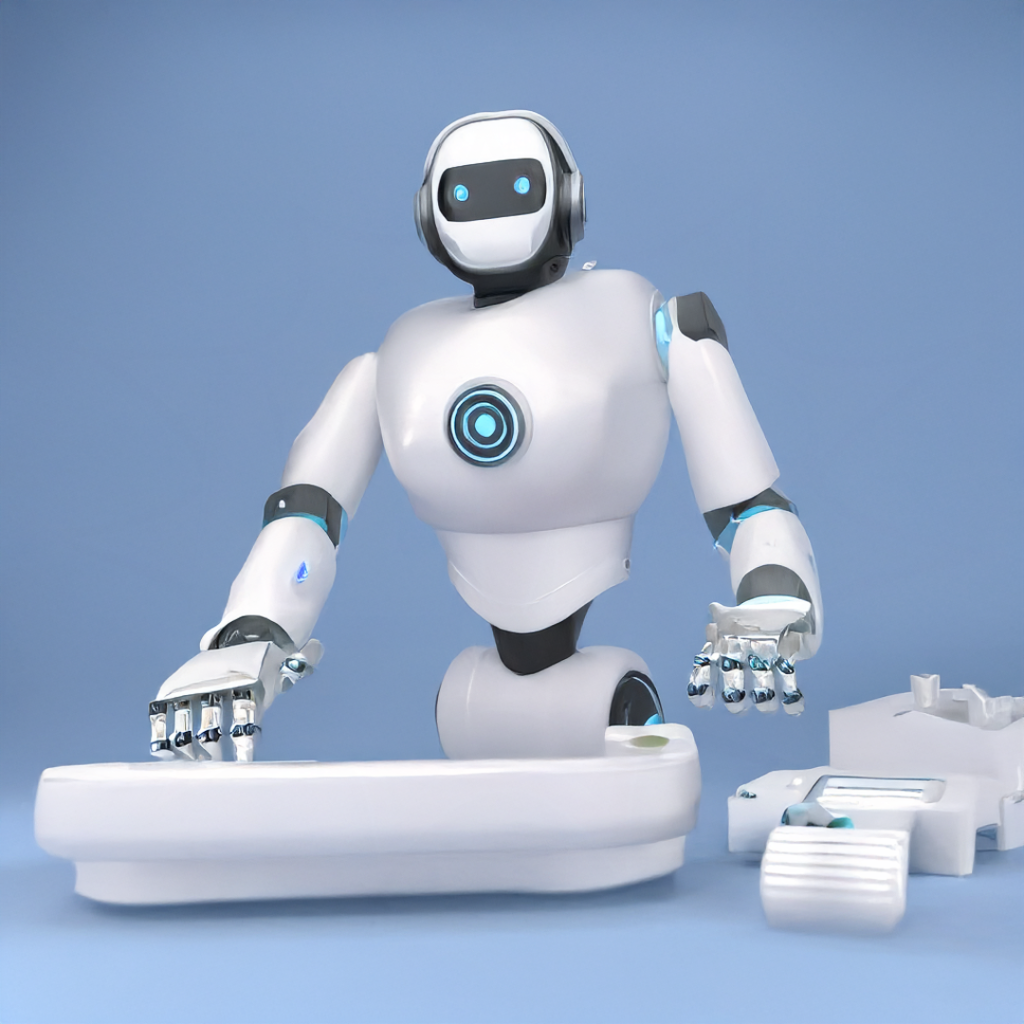
Introduction: Welcome to the Automated Future
Imagine a world where the tedious, repetitive parts of your workday simply… disappear. Not a dream, but a growing reality thanks to **AI automations**. These smart technologies are changing how businesses operate, making everything smoother, faster, and more efficient. If you’ve heard the buzz about artificial intelligence but aren’t sure how it applies to *your* business, you’re in the right place. We’ll break down what AI automations are, how they can transform your operations, and introduce you to the powerful concept of **business automation with AI** in a way that’s easy to understand. Get ready to unlock new levels of productivity!
What Exactly Are AI Automations?
At its core, automation means using technology to perform tasks without human intervention. Think of a factory assembly line. AI takes this a step further. Instead of just following a set of pre-programmed rules, **AI automations** use artificial intelligence to *learn*, *adapt*, and *make decisions*. This means they can handle more complex tasks, recognize patterns, and even improve over time. Traditional automation might send a pre-set email every time a new customer signs up. AI automation, however, could analyze a customer’s behavior, identify their specific needs, and then craft a personalized email campaign, adjusting its approach based on how the customer responds. It’s like having a super-smart assistant who not only follows instructions but also figures out the best way to do things.
Why Your Business Can’t Ignore AI Automation
The benefits of integrating **business automation with AI** are compelling for companies of all sizes. First and foremost, it saves an incredible amount of time. Instead of spending hours on data entry, scheduling, or responding to routine customer inquiries, your team can focus on creative problem-solving, strategic planning, and building stronger relationships – tasks that truly require human intellect. Secondly, AI significantly reduces the chance of human error. Automated systems perform tasks with consistent accuracy, which is crucial for financial processes, data management, and compliance. This leads to fewer mistakes, less rework, and ultimately, cost savings. Furthermore, AI automation can operate 24/7, ensuring tasks are completed even outside of business hours. This means faster response times for customers, quicker processing of orders, and generally a more responsive and agile business. It also provides valuable insights by analyzing large datasets much faster than humans ever could, helping you make smarter, data-driven decisions. In a competitive market, ignoring these advantages means falling behind.
Real-World Scenarios: Business Automation with AI in Action
Let’s look at how **business automation with AI** is being used today across various departments:
* **Customer Service:** AI-powered chatbots can handle a large volume of common customer questions instantly, freeing up human agents for more complex issues. They can guide customers through troubleshooting, provide product information, and even process basic requests.
* **Marketing and Sales:** AI can personalize marketing campaigns by analyzing customer data, suggesting optimal content, and even automating email outreach sequences. Sales teams use AI to qualify leads, predict sales trends, and automate follow-up communications.
* **Human Resources:** From screening resumes for relevant keywords to automating onboarding paperwork and scheduling interviews, AI streamlines HR processes, making them faster and fairer.
* **Finance:** AI automates invoice processing, expense reporting, fraud detection, and even helps with budget forecasting by analyzing financial data trends.
* **IT Operations:** AI monitors systems for anomalies, predicts potential issues, and automates responses to common IT problems, ensuring smoother operations and less downtime.
These examples show that AI isn’t just for tech giants; it’s a versatile tool that can enhance almost any aspect of your business operations.
Choosing the Right Workflow Automation Tools
To implement AI automations, you’ll need the right **workflow automation tools**. The market is full of options, and choosing the best fit depends on your specific needs and existing systems.
Here are types of tools to consider:
* **Robotic Process Automation (RPA) Platforms:** These tools mimic human actions to automate repetitive, rule-based tasks across different applications, like data entry or form filling. While not strictly AI, many RPA platforms now integrate AI capabilities for enhanced decision-making.
* **AI-Powered Integration Platforms:** These allow different software applications to communicate with each other automatically. For instance, when a customer buys something on your website, an AI integration tool could automatically update your CRM, send a confirmation email, and notify your shipping department.
* **Specific AI Solutions:** These are tailored for particular functions, such as AI writing assistants for content creation, AI-driven analytics dashboards, or AI-powered scheduling software.
When selecting tools, look for ease of use, scalability (can it grow with your business?), compatibility with your current software, and strong security features. Don’t feel overwhelmed; many tools offer free trials or starter packages, allowing you to test the waters before making a big commitment. The goal is to find tools that seamlessly integrate into your existing workflows.
The Power of AI Task Automation: Daily Transformations
Let’s zoom in on how **AI task automation** can revolutionize your daily grind. Think about all the small, individual tasks that consume valuable time each day or week.
* **Email Management:** AI can sort your inbox, prioritize important messages, flag urgent requests, and even draft responses to common queries, ensuring you never miss a critical communication.
* **Scheduling and Calendar Management:** AI-powered assistants can coordinate meeting times with multiple attendees, send out invitations, and even book meeting rooms, all with minimal input from you.
* **Data Entry and Processing:** Instead of manually inputting information from documents or spreadsheets, AI can extract relevant data, populate databases, and even cross-reference information for accuracy, saving hours of tedious work.
* **Report Generation:** AI can compile data from various sources and generate custom reports, dashboards, and presentations on demand, providing real-time insights without manual effort.
* **Content Curation:** For marketers, AI can sift through vast amounts of information to identify trending topics, curate relevant articles, or even help generate initial drafts of blog posts or social media updates.
By automating these smaller, repeatable tasks, individuals and teams gain significant chunks of time back, allowing them to focus on more complex, creative, and fulfilling aspects of their jobs. It’s about working smarter, not harder.
Getting Started: Your First Steps with AI Automation
Ready to dive into **AI automations**? Start small.
1. **Identify Pain Points:** Which tasks are most repetitive, time-consuming, or prone to errors in your business? These are prime candidates for automation.
2. **Research Solutions:** Look for **workflow automation tools** or specific AI solutions designed for those pain points.
3. **Start with a Pilot Project:** Choose one small, low-risk area to automate first. This allows you to learn the ropes, demonstrate success, and build confidence within your team.
4. **Train Your Team:** Ensure your employees understand the new tools and how they will enhance their roles, not replace them.
5. **Measure and Adjust:** Track the impact of your automation. Are you saving time? Reducing errors? Use this data to refine your approach and expand to other areas. Embracing AI is a journey, not a one-time setup.
Frequently Asked Questions
What’s the main difference between traditional automation and AI automation?
Traditional automation follows strict, pre-set rules, like a fixed instruction manual. AI automation, however, uses artificial intelligence to learn, adapt, and make decisions based on data, allowing it to handle more complex and varied tasks.
Do AI automations replace human jobs?
While AI automations can take over repetitive tasks, their primary role is to *augment* human capabilities, not replace them entirely. They free up employees to focus on strategic, creative, and interpersonal tasks that AI cannot perform, ultimately creating more engaging roles.
Is AI automation expensive for small businesses?
Not necessarily. There are many scalable **workflow automation tools** available, including free trials and affordable subscription models, that cater to small and medium-sized businesses. Starting small with specific **AI task automation** can offer significant returns without a huge initial investment.
How secure are AI automation tools with sensitive business data?
Reputable AI automation tools prioritize security. They typically employ advanced encryption, compliance with data protection regulations (like GDPR), and robust access controls. When choosing a tool, always research its security protocols and data handling policies thoroughly.
Conclusion
Embracing **AI automations** is no longer just a luxury but a necessity for businesses aiming for efficiency and growth. From streamlining everyday tasks with **AI task automation** to revolutionizing entire departments through **business automation with AI**, the potential is immense. Start exploring these powerful tools today and unlock a future where your business truly thrives on smart, automated processes.