
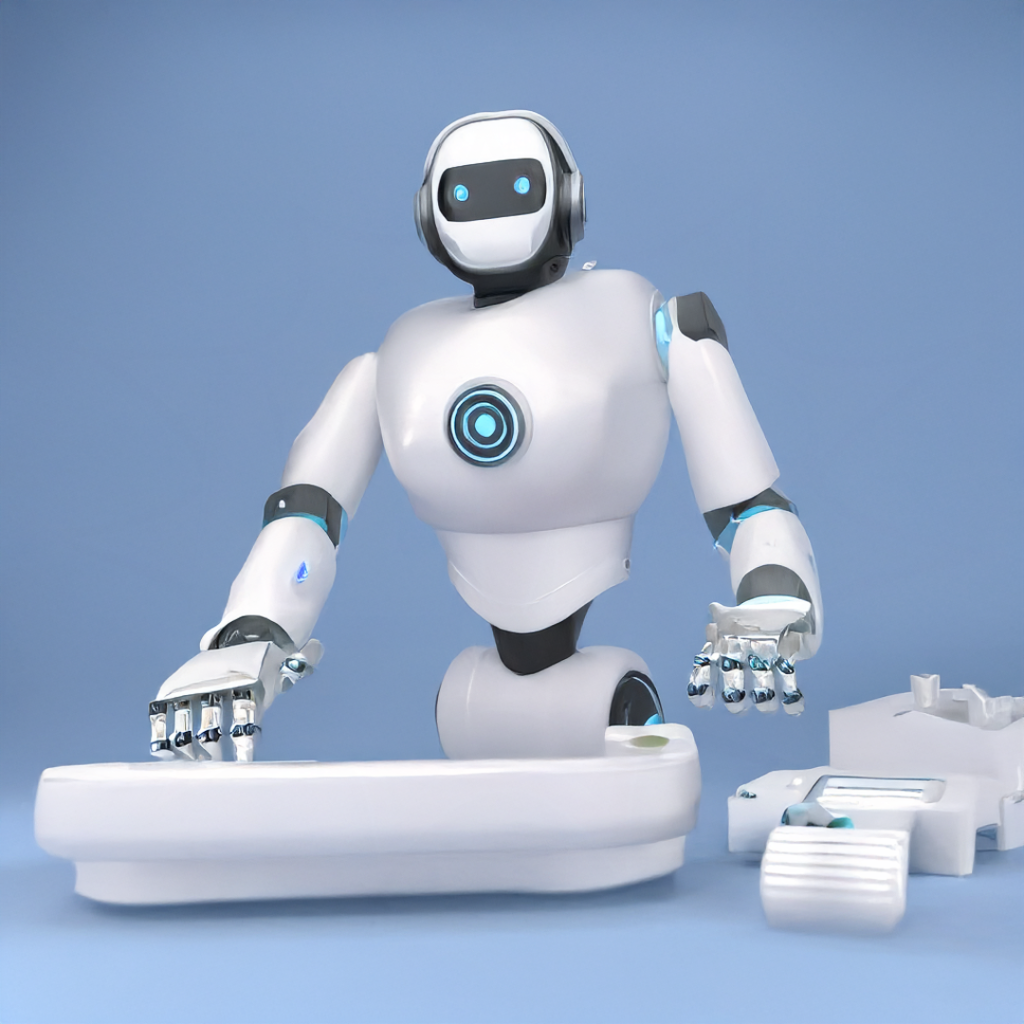
Welcome to the Future of Work: Making Life Easier with AI
In today’s fast-paced business world, everyone is looking for ways to do more with less. Imagine if you could get rid of all those repetitive, time-consuming tasks that eat into your day. Think about what your team could achieve if they weren’t bogged down by manual data entry, endless scheduling, or sifting through mountains of emails. This isn’t a pipe dream; it’s the reality offered by **AI automations**. Simply put, AI automations use artificial intelligence to handle tasks that typically require human effort, making your business operations smoother and more efficient. It’s about letting smart technology do the heavy lifting so your human team can focus on what they do best: thinking, creating, and connecting with customers. From small startups to large corporations, businesses are discovering that embracing **AI automations** is not just about saving time, but about unlocking new levels of productivity and innovation. Let’s dive into how this exciting technology can revolutionize the way you work.
What Exactly Are AI Automations?
At its core, an automation is anything that makes a process happen automatically, without human intervention. Think of a thermostat turning on your heating when the temperature drops. Simple, right? **AI automations** take this concept a step further. Instead of just following basic ‘if this, then that’ rules, AI automations use artificial intelligence to learn, adapt, and make decisions. This means they can handle more complex tasks, recognize patterns, and even predict outcomes. For example, a simple automation might send a welcome email to a new subscriber. An AI automation, however, could analyze a new subscriber’s behavior, identify their interests, and then send a series of personalized emails tailored to their specific needs, all without a human lifting a finger. It’s like having a super-smart assistant who not only follows instructions but also figures out the best way to do things on its own. This ability to learn and improve over time is what makes AI automations so powerful and different from traditional automation.
Why Your Business Needs AI Automations Today
The reasons to adopt **AI automations** are compelling. First and foremost, they save a tremendous amount of time. Imagine hours spent on tasks like data entry, scheduling appointments, generating reports, or managing customer inquiries. AI can handle these tasks in seconds, freeing up your employees for more strategic work. This leads to significant cost savings, as you can optimize your workforce and reduce the need for constant manual oversight. Beyond time and money, AI automations dramatically reduce human error. Even the most meticulous person can make a mistake when performing repetitive tasks, but AI systems are built for consistency and precision. This means fewer errors, happier customers, and a more reliable operation. Furthermore, adopting **business automation with AI** gives you a competitive edge. It allows your business to respond faster, personalize customer experiences, and make data-driven decisions more effectively than competitors still relying on manual processes. By automating the mundane, you empower your team to focus on innovation, problem-solving, and building stronger relationships, ultimately driving growth and success.
The Brains Behind the Operation: How AI Powers Business Automation
So, how does AI actually achieve all this automation magic? It’s all thanks to advanced technologies like machine learning, natural language processing (NLP), and computer vision. Machine learning allows AI systems to learn from vast amounts of data without being explicitly programmed for every single scenario. For example, an AI could analyze years of sales data to predict future purchasing trends or identify which customers are most likely to churn. This predictive capability is key to smart **business automation with AI**. Natural Language Processing enables AI to understand, interpret, and generate human language. This is what powers chatbots that can answer customer questions, tools that summarize long documents, or systems that can process customer feedback. Computer vision allows AI to ‘see’ and interpret images and videos, useful for quality control in manufacturing or security surveillance. When these AI capabilities are integrated into your business processes, they transform simple automations into intelligent systems. They don’t just follow rules; they learn, adapt, and make informed decisions, making every automated task smarter and more effective, truly enabling comprehensive **business automation with AI**.
Key Areas Where Business Automation with AI Shines
**Business automation with AI** can be applied across almost every department. In customer service, AI-powered chatbots can handle common queries 24/7, routing complex issues to human agents only when necessary. This drastically improves response times and customer satisfaction. For marketing, AI can personalize email campaigns, optimize ad placements, and even generate content ideas by understanding audience preferences. Think about how much time is saved when AI manages targeted ad campaigns, ensuring your message reaches the right people at the right time. In human resources, AI can streamline the hiring process by screening resumes, scheduling interviews, and even analyzing candidate responses to pre-recorded questions. This speeds up recruitment and helps find the best talent. Finance departments benefit from AI that can automate invoice processing, detect fraudulent transactions, and forecast financial trends. Operations can use AI for supply chain optimization, predicting demand, and managing inventory more efficiently. From sales to IT, AI is making processes faster, smarter, and more cost-effective, allowing businesses to operate with unparalleled agility and insight.
Your Toolkit for Efficiency: Workflow Automation Tools
To implement **AI automations**, you’ll need the right **workflow automation tools**. These tools are the platforms and software that allow you to design, build, and manage your automated processes. They come in many forms. Robotic Process Automation (RPA) tools, for instance, are great for automating repetitive, rule-based tasks by mimicking how humans interact with software interfaces. They can fill out forms, extract data, and move files between systems. Integration Platform as a Service (iPaaS) tools help connect different applications and data sources, ensuring seamless data flow across your entire tech stack. Imagine your CRM talking directly to your accounting software – that’s iPaaS at work. Many modern **workflow automation tools** also offer low-code or no-code interfaces, meaning you don’t need to be a programmer to set up sophisticated automations. They often include pre-built templates for common tasks, drag-and-drop interfaces, and analytics dashboards to track performance. Choosing the right set of tools depends on your specific needs, but the goal is always the same: to create seamless, efficient workflows that leverage AI to get tasks done automatically and intelligently, freeing up your team’s valuable time.
Putting AI to Work: Practical Steps for AI Task Automation
Ready to dive into **AI task automation**? Here’s a simple roadmap to get started. First, identify the repetitive tasks that consume the most time and effort in your business. These are often manual data entry, report generation, email sorting, or routine customer inquiries. Prioritize tasks that are rule-based, occur frequently, and have a clear, measurable outcome. Second, start small. Don’t try to automate everything at once. Pick one or two high-impact tasks and focus on getting them right. This allows you to learn and refine your approach without overwhelming your team. Third, research and choose the right **workflow automation tools**. Look for platforms that are user-friendly, scalable, and integrate well with your existing systems. Many tools offer free trials, so you can test them out. Fourth, design your automation carefully. Map out each step of the process and how AI will be incorporated. Finally, launch your automation, monitor its performance, and be ready to refine it. AI learns over time, so continuous feedback and adjustments will help your **AI task automation** become even more effective, delivering greater value to your business.
Overcoming Common Hurdles in AI Automation
While the benefits of **AI automations** are clear, businesses can sometimes face challenges during implementation. One common hurdle is data quality. AI systems rely on good, clean data to learn effectively. If your data is messy or incomplete, your automations might not perform as expected. The solution is to invest time in cleaning and organizing your data before deploying AI. Another challenge can be integrating new **workflow automation tools** with existing legacy systems. Ensure that the tools you choose have robust integration capabilities or consider iPaaS solutions to bridge the gap. Employee adoption is also crucial. Some team members might be wary of automation, fearing job displacement. It’s vital to communicate the benefits of AI automations, emphasizing how they free up employees for more creative and fulfilling work, rather than replacing them. Provide training and involve your team in the process. Finally, security and compliance are paramount. Ensure that your chosen AI solutions meet industry standards for data privacy and security. By proactively addressing these potential challenges, your journey into **business automation with AI** will be much smoother and more successful.
The Future Is Automated: What’s Next for AI in Business
The world of **AI automations** is constantly evolving. What we see today is just the beginning. In the coming years, we can expect AI to become even more sophisticated, capable of handling increasingly complex and nuanced tasks. Predictive analytics will become even more precise, allowing businesses to anticipate market shifts and customer needs with greater accuracy. Personalized experiences will reach new heights, with AI tailoring every interaction to individual preferences. The integration of AI with other emerging technologies like the Internet of Things (IoT) will create ‘smart’ environments where devices and systems communicate and automate processes seamlessly. We’ll see more intelligent robots in manufacturing and logistics, and AI will continue to assist in scientific discovery and medical breakthroughs. For businesses, this means even greater opportunities for efficiency, innovation, and growth. Embracing **AI task automation** now isn’t just about staying competitive; it’s about preparing your business for a future where intelligent automation is simply the standard way of doing things. The future of work is undeniably automated, and AI is leading the charge.
Frequently Asked Questions
What’s the main benefit of AI automations for small businesses?
For small businesses, the main benefit of AI automations is increased efficiency and cost savings. By automating repetitive tasks, owners and employees can focus on growing the business and serving customers, rather than getting bogged down by manual operations.
Is business automation with AI expensive?
The cost of business automation with AI varies widely depending on the complexity of the tasks and the tools used. Many workflow automation tools offer scalable pricing, and the return on investment (ROI) from saved time and reduced errors often outweighs the initial cost.
Do I need to be a tech expert to use workflow automation tools?
No, not necessarily. Many modern workflow automation tools are designed with user-friendly interfaces, often featuring low-code or no-code options and drag-and-drop builders. This makes AI task automation accessible even for those without extensive technical knowledge.
Can AI replace human jobs?
AI automations are designed to automate tasks, not necessarily replace entire jobs. They take over repetitive, manual work, freeing up human employees to focus on more creative, strategic, and interpersonal aspects of their roles. It’s more about augmenting human capabilities than replacing them.
How quickly can I see results from AI task automation?
The speed at which you see results from AI task automation depends on the task’s complexity and the tool implemented. Simple automations can show benefits almost immediately, while more complex business automation with AI might take a few weeks to optimize and demonstrate significant impact.
Conclusion
The journey towards a more efficient and innovative business is increasingly paved by **AI automations**. By understanding what they are, why they’re crucial, and how to implement them with the right **workflow automation tools**, you can unlock immense potential. **Business automation with AI** is no longer a luxury but a strategic imperative that allows you to save time, reduce costs, minimize errors, and empower your team. Start small, learn as you go, and embrace the power of **AI task automation** to transform your operations. The future of work is intelligent, automated, and waiting for you to seize its benefits.