
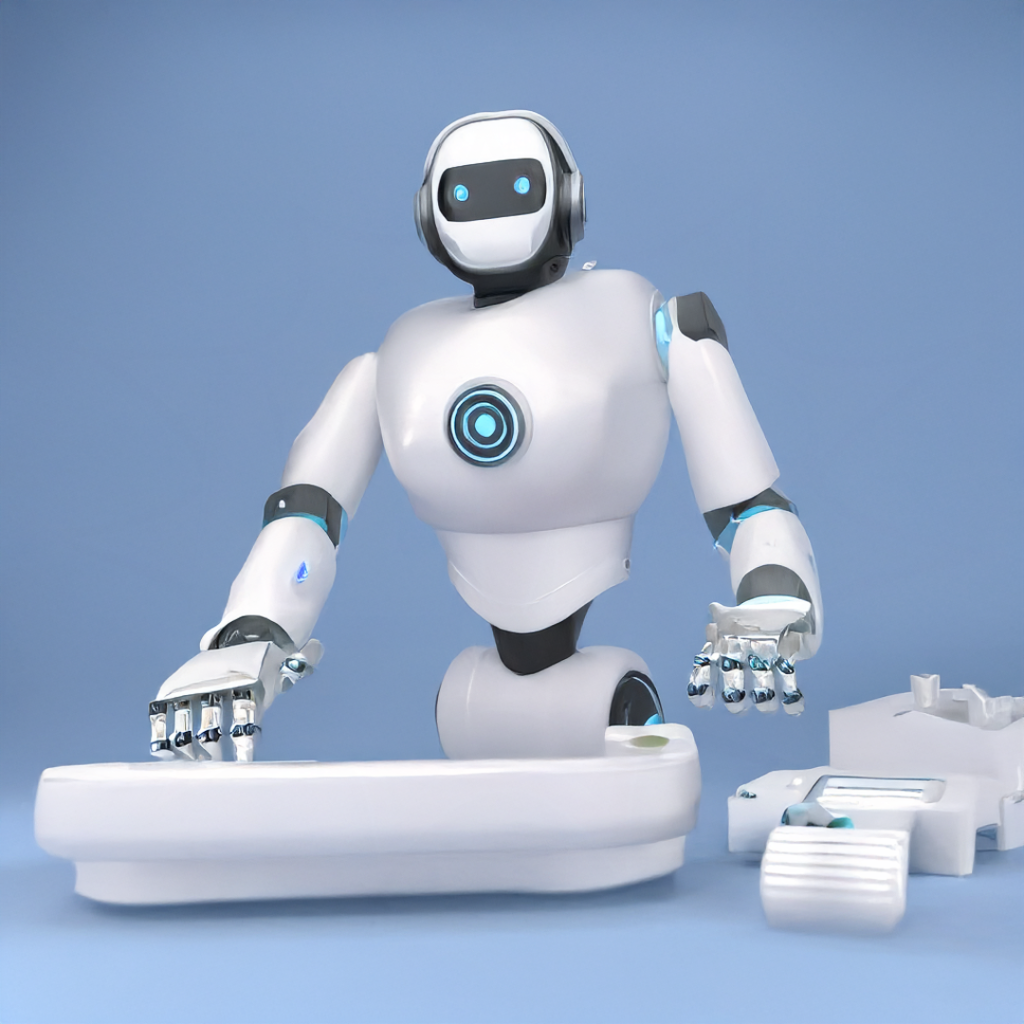
Unlock Efficiency: The Future is Here with AI Automations
In today’s fast-paced business world, staying ahead means constantly looking for smarter, faster ways to get things done. What if you could make your business run smoother, reduce errors, and free up your team to focus on what truly matters? This isn’t a pipe dream; it’s the reality of AI automations. Artificial Intelligence, or AI, is no longer just a futuristic concept from movies. It’s a powerful tool that is changing how businesses operate, making processes more efficient, and opening doors to unprecedented productivity. From small startups to large corporations, businesses are discovering the immense potential of integrating AI into their daily tasks.
At its core, AI automations involve using intelligent systems to handle repetitive, time-consuming tasks that humans typically perform. This goes beyond simple automation; AI adds the element of ‘intelligence,’ allowing systems to learn, adapt, and make decisions based on data. Imagine your administrative tasks, customer service inquiries, or even complex data analysis being handled with speed and precision by smart software. This isn’t about replacing people but about empowering them by taking away the mundane, allowing them to engage in more creative, strategic, and impactful work. Throughout this article, we’ll explore what AI automations truly mean for your business, delve into essential workflow automation tools, and see practical examples of AI task automation in action.
What Exactly Are AI Automations?
To truly appreciate the impact, let’s clarify what we mean by AI automations. Simply put, it’s the combination of Artificial Intelligence with traditional automation techniques. Where traditional automation follows a set of predefined rules to complete tasks, AI brings the ability to ‘think,’ ‘learn,’ and ‘reason’ to the process. This means AI-powered systems can handle more complex scenarios, adapt to new information, and even improve their performance over time without constant human reprogramming.
Think of it this way: a basic automation might automatically send a pre-written email response when a specific keyword is detected. AI automation, however, could understand the intent behind a customer’s email, categorize it, pull relevant information from various databases, and craft a personalized response, or even route it to the correct department – all without human involvement. This ‘smart’ automation is what allows for true business automation with AI, transforming not just individual tasks but entire workflows and operational strategies. It’s about making your systems intelligent enough to handle complexity and variation, leading to more robust and reliable business processes.
Why Your Business Needs AI Automation
The benefits of embracing AI automations are numerous and compelling. For any business looking to thrive in today’s competitive landscape, ignoring this technology is simply not an option. Here’s why business automation with AI is essential:
* **Increased Efficiency and Productivity:** AI can process data and execute tasks far faster than any human. This means more work gets done in less time, freeing up valuable employee hours.
* **Cost Savings:** By automating repetitive tasks, you reduce the need for manual labor on those specific duties, leading to significant cost reductions over time. Less human error also means fewer resources spent on corrections.
* **Reduced Human Error:** Humans are prone to mistakes, especially with repetitive or data-heavy tasks. AI systems, once correctly configured, perform tasks with near-perfect accuracy, leading to higher quality outputs.
* **Faster Operations:** From customer service responses to data analysis, AI can dramatically speed up operations, improving reaction times and decision-making.
* **Employee Empowerment:** By offloading monotonous tasks to AI, your employees can dedicate their time and creativity to more strategic, engaging, and value-added activities, leading to higher job satisfaction and better innovation.
* **Better Customer Experience:** AI-powered chatbots and automated support systems can provide instant, consistent, and personalized responses 24/7, significantly improving customer satisfaction and loyalty.
* **Scalability:** AI automations allow your business to scale operations without proportionally increasing your workforce, making growth more manageable and sustainable.
Key Areas for Business Automation with AI
AI automations aren’t limited to a single department; they can infuse intelligence into almost every aspect of your business. Here are some key areas where business automation with AI is making a significant impact:
* **Customer Service:** AI-powered chatbots and virtual assistants can handle routine inquiries, guide customers, and provide instant support, resolving issues faster and freeing human agents for complex problems.
* **Data Entry and Processing:** AI can extract information from documents, process invoices, and update databases automatically, eliminating manual data entry errors and saving countless hours.
* **Marketing and Sales:** AI personalizes customer experiences, automates email campaigns, analyzes market trends, and even identifies potential leads, making marketing efforts more targeted and effective.
* **Human Resources (HR):** Automate onboarding processes, schedule interviews, answer common HR questions, and manage employee data more efficiently, streamlining administrative burdens.
* **Finance and Accounting:** AI can automate expense reporting, reconcile accounts, detect fraud, and generate financial reports, ensuring accuracy and compliance.
* **Operations and Supply Chain:** From inventory management and order processing to logistics optimization, AI automations can predict demand, streamline workflows, and reduce operational costs. Each of these areas benefits from the precision and speed that AI task automation brings, transforming bottlenecks into smooth, efficient processes.
Unlocking Efficiency with Workflow Automation Tools
Implementing AI automations requires the right infrastructure, and that’s where workflow automation tools come into play. These are software platforms designed to connect different applications, automate sequences of tasks, and manage entire business processes end-to-end. When integrated with AI, these tools become incredibly powerful, enabling intelligent decision-making within your automated workflows.
There are various types of workflow automation tools, from simple integration platforms to sophisticated Robotic Process Automation (RPA) suites:
* **Integration Platforms (e.g., Zapier, Make):** These tools connect different web applications (like your CRM, email, project management software) and automate actions between them. For instance, a new lead in your CRM could automatically trigger an email sequence and create a task in your project management tool.
* **Robotic Process Automation (RPA) (e.g., UiPath, Automation Anywhere, Microsoft Power Automate):** RPA tools are like software robots that mimic human actions on a computer. They can open applications, log in, copy data, paste information, and even interact with legacy systems, automating highly repetitive, rule-based tasks across different software without direct API integration. When AI is added, RPA bots can ‘read’ unstructured data, make decisions, and handle exceptions.
* **Business Process Management (BPM) Suites:** These comprehensive platforms help businesses design, execute, monitor, and optimize complex end-to-end processes. AI integration in BPM can lead to process mining (discovering how processes actually run), predictive analytics for bottlenecks, and intelligent task routing.
Choosing the right workflow automation tools depends on the complexity of your processes and the scale of automation you wish to achieve. Many modern tools are user-friendly, allowing even non-technical staff to build powerful AI task automation sequences.
AI Task Automation in Action: Real-World Examples
Seeing is believing, and when it comes to AI task automation, practical examples truly highlight its transformative power. Here are some real-world scenarios where businesses are leveraging AI:
* **Automated Email Categorization and Routing:** An AI system can analyze incoming customer support emails, understand their content and urgency, automatically categorize them (e.g., ‘billing inquiry,’ ‘technical support’), and route them to the most appropriate agent or department, significantly reducing response times.
* **Smart Scheduling:** AI can analyze calendars, team availability, and meeting priorities to automatically schedule appointments and meetings, sending invites and reminders without manual intervention.
* **Automated Content Generation:** For routine communications, AI can draft basic reports, social media posts, or even product descriptions based on provided data or templates, saving marketing teams valuable time.
* **Fraud Detection in Finance:** AI algorithms can analyze transaction patterns in real-time to identify suspicious activities that deviate from normal behavior, flagging potential fraud much faster and more accurately than human analysis.
* **Personalized Product Recommendations:** E-commerce sites use AI to analyze customer browsing history and purchase patterns to suggest relevant products, enhancing the shopping experience and increasing sales.
* **Inventory Management:** AI predicts future demand based on historical data, seasonal trends, and external factors, automating reorder processes and optimizing stock levels to prevent overstocking or stockouts.
* **Quality Control in Manufacturing:** AI-powered computer vision systems can inspect products on an assembly line, identifying defects with greater speed and consistency than human inspectors.
These examples show how AI automations are not just theoretical; they are practical solutions solving real business challenges, streamlining operations, and driving efficiency across various industries. Each application demonstrates the profound impact of strategic AI task automation.
Getting Started with AI Automation: A Simple Roadmap
Feeling inspired but unsure where to begin? Implementing AI automations doesn’t have to be overwhelming. Here’s a simple roadmap to get started with business automation with AI:
1. **Identify Repetitive Tasks:** Start by pinpointing tasks that are mundane, time-consuming, and occur frequently. These are prime candidates for AI task automation.
2. **Start Small:** Don’t try to automate everything at once. Pick one or two high-impact, relatively simple tasks or workflows to automate first. This allows you to learn and demonstrate value quickly.
3. **Research Suitable Tools:** Explore the various workflow automation tools available. Many offer free trials or affordable entry-level plans. Consider what integrates best with your existing systems.
4. **Train and Adapt:** AI systems often require some initial data or rules to learn. Be prepared to provide feedback and refine the automation as it starts running. Remember, AI learns and improves over time.
5. **Measure Impact:** Track the results of your automation efforts. Are you saving time? Reducing costs? Improving accuracy? Measuring success helps justify further investment and expansion.
Overcoming Challenges on Your Automation Journey
While AI automations offer immense benefits, it’s also wise to be aware of potential challenges. These can include ensuring data quality for AI learning, integrating new tools with existing legacy systems, and managing the initial learning curve for your team. Human oversight remains crucial to monitor performance, make adjustments, and ensure ethical use of AI. Approaching these challenges proactively will ensure a smoother transition to a more automated future.
Frequently Asked Questions
What’s the main difference between traditional automation and AI automation?
Traditional automation follows predefined rules to complete tasks, like a simple ‘if X, then Y’ instruction. AI automation, however, uses Artificial Intelligence to learn, adapt, and make decisions, allowing it to handle more complex, variable tasks and even improve over time without direct human intervention.
Is AI automation only for large businesses with big budgets?
Not at all! While large enterprises use AI, many AI automations and workflow automation tools are now accessible and affordable for small and medium-sized businesses. Cloud-based solutions and low-code/no-code platforms make it easier than ever to implement AI task automation without extensive technical expertise or a huge budget.
Will AI automations replace human jobs?
The goal of AI automations is typically to augment human capabilities, not replace them. AI takes over repetitive, tedious tasks, freeing up human employees to focus on more creative, strategic, and complex problem-solving. It shifts the nature of work, often creating new roles that involve managing, monitoring, and leveraging AI technologies.
How secure are AI automation systems with sensitive business data?
Security is a critical concern for any automation system handling sensitive data. Reputable AI automation providers invest heavily in robust security measures, including data encryption, access controls, and compliance with industry standards. When choosing workflow automation tools, it’s important to research their security protocols and ensure they meet your business’s compliance requirements.
Conclusion
The world of business is constantly evolving, and AI automations are at the forefront of this transformation. By embracing business automation with AI, companies of all sizes can unlock incredible levels of efficiency, reduce operational costs, minimize errors, and empower their employees to focus on innovation. Whether you’re just starting to explore workflow automation tools or looking to enhance existing processes with advanced AI task automation, the journey towards a smarter, more productive future begins now. Don’t be left behind; start exploring how AI can revolutionize your business today and pave the way for sustainable growth and a competitive edge.