
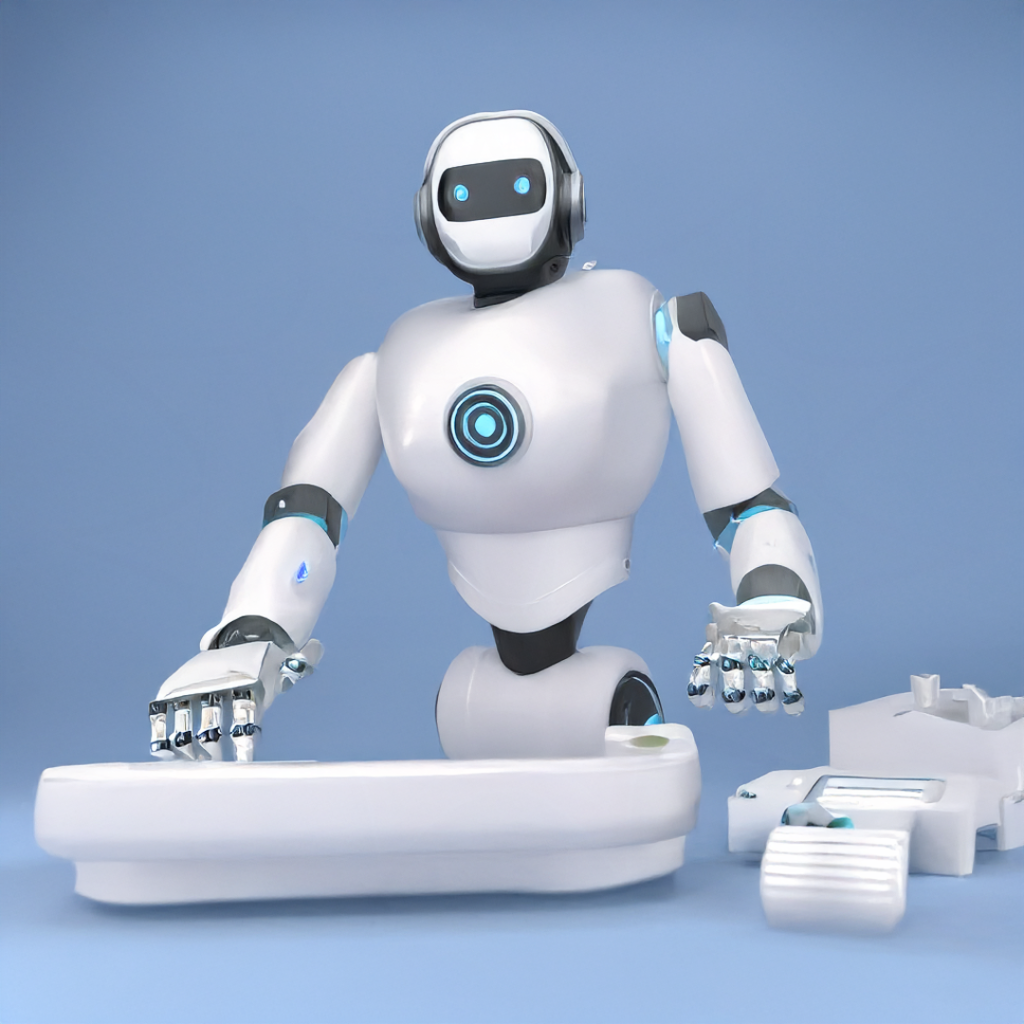
Introduction: What Are AI Automations and Why They Matter
Imagine a world where the repetitive, time-consuming parts of your workday simply… disappear. This isn’t science fiction anymore; it’s the reality brought by AI automations. For businesses everywhere, embracing AI is no longer an option but a crucial step towards staying competitive and efficient. At its core, AI automations involve using artificial intelligence to handle tasks that would normally require human effort. This means computers learn to perform routine actions, make decisions, and even solve problems with minimal human input.
Why should you care? Because business automation with AI isn’t just about cutting costs; it’s about freeing up your most valuable asset – your people – to focus on what they do best: innovating, strategizing, and building relationships. From managing customer queries to analyzing vast amounts of data, AI automations are quietly revolutionizing how businesses operate. This guide will break down what you need to know about harnessing this powerful technology, making it simple and easy to understand, so you can start seeing its benefits in your own organization.
The Power of Business Automation with AI
In today’s fast-paced world, speed and accuracy are everything. This is where business automation with AI truly shines. By automating tasks, businesses can significantly reduce human error, speed up processes, and operate around the clock without breaks. Think about it: every minute saved on a repetitive task allows an employee to dedicate that time to more complex, creative, or customer-facing initiatives. This leads to higher job satisfaction, better quality output, and ultimately, a healthier bottom line.
AI isn’t just following rules; it’s learning and adapting. This means it can handle more complex automation than traditional tools. For example, AI can analyze customer behavior to personalize marketing messages, predict equipment failures before they happen, or even draft initial responses to emails based on their content. The impact of these AI automations ripples across every department, enhancing productivity, improving decision-making through data analysis, and giving companies a significant edge in the market. It’s about working smarter, not just harder, and letting AI handle the heavy lifting of routine operations.
Where AI Task Automation Makes the Biggest Impact
AI task automation can be applied to almost any area of your business, but some departments see particularly dramatic improvements. Let’s look at a few key examples:
* **Customer Service:** Chatbots powered by AI can handle a vast number of customer inquiries instantly, 24/7. They can answer FAQs, guide customers through troubleshooting, and even process simple orders or refunds, freeing human agents to focus on complex or sensitive issues. This leads to quicker resolutions and happier customers.
* **Marketing and Sales:** AI automations can personalize email campaigns, segment customer lists with incredible accuracy, predict which leads are most likely to convert, and even suggest optimal times to contact prospects. This targeted approach increases conversion rates and makes marketing efforts more effective.
* **Human Resources (HR):** AI can streamline recruitment by sifting through resumes, scheduling interviews, and even answering candidate questions. It can also automate onboarding processes, manage employee data, and help with performance analysis, saving HR teams countless hours.
* **Finance and Accounting:** AI automations are excellent for processing invoices, reconciling accounts, detecting fraud, and generating financial reports. This reduces manual data entry errors and ensures financial operations are precise and timely.
* **Operations and Logistics:** From optimizing supply chains to managing inventory and predicting demand, AI can make operational processes much more efficient. This reduces waste, cuts costs, and ensures smooth delivery of goods and services.
Exploring Workflow Automation Tools Powered by AI
To put AI automations into action, you’ll need the right tools. The market is flooded with various workflow automation tools that leverage AI to streamline processes across different business functions. These tools are designed to be user-friendly, often with drag-and-drop interfaces, making it easier for businesses of all sizes to adopt AI without needing a team of data scientists.
Some common types of workflow automation tools include:
* **Robotic Process Automation (RPA) Platforms:** These tools use ‘bots’ to mimic human actions, like clicking, typing, and copying data, to automate repetitive digital tasks. When combined with AI, they can handle more complex scenarios, such as understanding unstructured data or making decisions based on learned patterns.
* **Customer Relationship Management (CRM) Systems with AI:** Modern CRMs often integrate AI to automate sales forecasting, lead scoring, customer service interactions, and personalized marketing campaigns. They help manage customer data more intelligently.
* **Enterprise Resource Planning (ERP) Systems with AI:** AI-enhanced ERPs can automate tasks across various departments, from finance and HR to supply chain and manufacturing. They provide integrated insights and process optimization.
* **Dedicated AI Automation Platforms:** These are platforms specifically built for creating AI automations, often offering modules for natural language processing (NLP), machine learning (ML), and intelligent document processing (IDP). They allow businesses to build custom AI workflows for unique needs.
Choosing the right tools depends on your specific business needs and the scale of the automation you envision. Many platforms offer free trials, allowing you to experiment and see the tangible benefits before making a significant investment. The goal is always to find tools that seamlessly integrate with your existing systems and workflows, making the transition to AI automation smooth and effective.
Getting Started with AI Automations: A Simple Roadmap
Adopting AI automations might seem daunting, but it doesn’t have to be. Here’s a simple roadmap to get you started:
1. **Identify Repetitive Tasks:** Start small. Look for tasks that are done frequently, are rule-based, and take up a lot of employee time. Good candidates for AI task automation include data entry, report generation, basic customer support, or invoice processing.
2. **Define Your Goals:** What do you hope to achieve? Is it to reduce errors, save time, cut costs, or improve customer satisfaction? Clear goals will help you measure success and justify your investment in business automation with AI.
3. **Research Workflow Automation Tools:** Based on your identified tasks and goals, explore available AI-powered tools. Look for solutions that fit your budget, are easy to integrate, and offer the specific automation capabilities you need. Don’t be afraid to try demos or free versions.
4. **Start with a Pilot Project:** Don’t try to automate everything at once. Pick one specific process or department for a pilot project. This allows you to learn, iron out kinks, and demonstrate success before scaling up.
5. **Train Your Team:** AI automations are meant to assist, not replace, your employees. Educate your team on how the new tools work and how they will free them up for more engaging work. Involve them in the process to gain their buy-in and insights.
6. **Monitor and Optimize:** Automation isn’t a one-time setup. Continuously monitor the performance of your AI automations. Are they delivering the expected results? Are there areas for improvement? AI models often get better with more data, so continuous optimization is key.
Challenges and How to Overcome Them
While the benefits of business automation with AI are significant, it’s also important to be aware of potential challenges. Knowing them upfront can help you plan and avoid pitfalls:
* **Initial Investment:** Setting up AI automations and acquiring workflow automation tools can require an upfront investment. Overcome this by starting with small, high-impact projects that demonstrate clear ROI quickly.
* **Integration Issues:** New AI systems need to work smoothly with your existing software. Choose tools that offer robust APIs (Application Programming Interfaces) or come with built-in integrations for popular platforms.
* **Data Quality:** AI thrives on data, and bad data leads to bad results. Ensure your data is clean, accurate, and relevant before feeding it into AI systems. Invest in data cleansing if necessary.
* **Employee Resistance:** Some employees might fear job displacement. Emphasize that AI task automation aims to augment human capabilities, not replace them, allowing staff to focus on more strategic, creative, and fulfilling work. Provide training and communicate openly.
* **Complexity:** Some AI solutions can be complex to set up and manage. Opt for user-friendly platforms and consider external expertise if your internal team lacks the necessary skills. Start simple and scale up as your understanding grows.
By addressing these challenges proactively, you can ensure a smoother transition and maximize the positive impact of AI automations on your business.
The Future of AI in Business Automation
The landscape of AI automations is evolving at an incredible pace. What we see today is just the beginning. In the future, business automation with AI will become even more sophisticated, personalized, and integrated. We can expect AI to not only automate tasks but also to proactively identify opportunities for improvement, predict market shifts with greater accuracy, and even engage in highly complex decision-making processes.
Imagine AI systems that can independently design new product features based on customer feedback analysis, or marketing campaigns that adapt in real-time to global events. The lines between human and machine collaboration will blur further, with AI serving as an indispensable co-pilot for every business function. Staying informed about new workflow automation tools and advancements in AI task automation will be crucial for any business aiming to maintain a competitive edge. The future isn’t just automated; it’s intelligently automated, opening up unprecedented possibilities for growth, innovation, and efficiency across all industries.
Frequently Asked Questions
What are AI automations?
AI automations use artificial intelligence to perform tasks that are usually done by humans. This includes repetitive tasks like data entry, but also more complex ones like analyzing information, making decisions, or responding to customer queries, all with minimal human oversight.
How can business automation with AI benefit my company?
Business automation with AI can significantly boost efficiency, reduce errors, cut operational costs, improve customer satisfaction, and free up employees to focus on more strategic work. It helps your business operate faster and smarter.
Are AI automations only for big companies?
Not at all! While large enterprises use AI, many AI-powered workflow automation tools are now accessible and affordable for small and medium-sized businesses. There are scalable solutions for almost any company size looking to automate tasks.
What kind of tasks can AI task automation handle?
AI task automation can handle a wide range of tasks including customer service (chatbots), marketing (personalizing emails), HR (recruiting and onboarding), finance (invoice processing), and operations (inventory management). If a task is repetitive and rule-based, or involves data analysis, it’s a good candidate.
Will AI automation replace human jobs?
The goal of AI automations is typically to augment human capabilities, not replace them. AI takes over the monotonous and repetitive tasks, allowing employees to focus on more creative, strategic, and human-centric work that requires critical thinking, empathy, and innovation.
Conclusion
AI automations are no longer a futuristic concept but a present-day necessity for businesses aiming for efficiency and growth. By strategically implementing business automation with AI, from leveraging powerful workflow automation tools to intelligently applying AI task automation in key areas, companies can unlock new levels of productivity. The journey begins with understanding your needs, choosing the right tools, and empowering your team. Embrace AI automations today to transform your operations and position your business for a smarter, more productive future.