
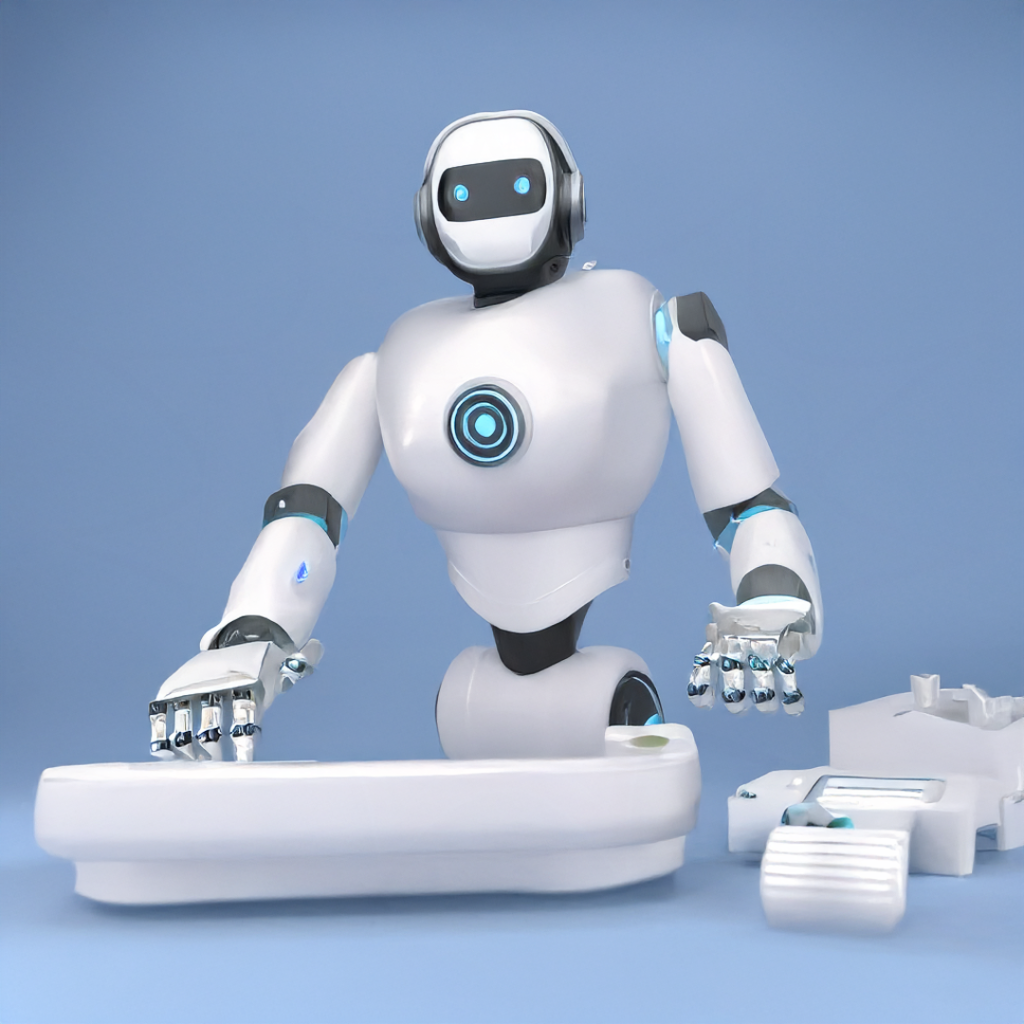
Introduction: What if Your Business Could Run Smarter, Not Harder?
Imagine a world where the repetitive, time-consuming tasks that bog down your workday are handled automatically, freeing you and your team to focus on what truly matters: innovation, strategy, and growth. This isn’t a futuristic dream; it’s the reality brought forth by AI automations. In today’s fast-paced business world, efficiency is key, and artificial intelligence is emerging as the ultimate partner for achieving it. Many businesses, big and small, are now looking at how they can use smart technology to get more done with less effort. This guide will simply explain how AI automations work, why they’re becoming essential, and how you can use them to transform your own business operations. Get ready to explore a simpler, smarter way of working.
Understanding AI Automations: More Than Just Simple Switches
So, what exactly are AI automations? At its core, automation means using technology to perform tasks without human intervention. Think of a light turning on when you enter a room – that’s simple automation. AI automations take this concept to a whole new level. Instead of just following basic ‘if this, then that’ rules, AI-powered systems can learn, adapt, and even make decisions. They use algorithms to understand patterns, process vast amounts of data, and execute complex tasks with accuracy that humans often can’t match. This means they can handle tasks that require a bit of ‘thinking,’ like classifying emails, recommending products, or even drafting reports. It’s about giving your systems a brain, allowing them to not just do, but to understand and respond intelligently. This ability to ‘think’ makes them incredibly powerful tools for any business looking to streamline its operations.
The Big Wins: Why Your Business Needs AI Automations
Embracing AI automations isn’t just about being tech-savvy; it’s about gaining real, measurable benefits that can dramatically improve your business. Here are some of the key advantages:
* **Boosted Efficiency**: This is perhaps the most obvious benefit. AI can perform tasks much faster than humans, and it can do so 24/7 without needing breaks. This means quicker turnaround times for customers and more productive hours for your team.
* **Cost Savings**: By automating repetitive tasks, you reduce the need for manual labor on those specific duties. This can lead to significant savings in operational costs over time. Plus, fewer errors mean less money spent on corrections.
* **Increased Accuracy and Reduced Errors**: Humans make mistakes; it’s natural. AI systems, once properly trained, perform tasks with a high degree of precision, reducing the chances of costly errors or inconsistencies in data.
* **Better Customer Experiences**: AI-powered chatbots can provide instant support, answering common questions and guiding customers, leading to faster resolutions and higher satisfaction. Personalized recommendations driven by AI also make customers feel valued.
* **Empowered Employees**: By taking over dull, repetitive work, AI frees up your employees to focus on more creative, strategic, and engaging tasks. This can lead to higher job satisfaction and a more innovative workforce.
* **Scalability**: As your business grows, AI automations can easily scale up to handle increased workloads without needing proportional increases in human staff. This allows your business to expand more smoothly and efficiently.
These benefits combine to create a more agile, cost-effective, and competitive business that’s ready for the challenges of tomorrow.
Where AI Shines: Business Automation with AI in Action
Business automation with AI can be applied across almost every department, transforming how work gets done. Let’s look at some common areas where AI is making a huge impact:
* **Customer Service**: Think of chatbots that can answer frequently asked questions, guide users through troubleshooting steps, or even escalate complex issues to human agents. AI can also analyze customer feedback to identify common problems and suggest improvements.
* **Marketing and Sales**: AI helps personalize marketing campaigns by analyzing customer data to understand preferences and predict purchasing behavior. It can automate email outreach, suggest optimal pricing, and even help generate compelling content for social media and blogs.
* **Operations and Logistics**: From optimizing supply chains to managing inventory, AI can predict demand, track shipments, and streamline warehouse operations. This leads to fewer delays, reduced waste, and more efficient resource allocation.
* **Human Resources (HR)**: AI can automate parts of the hiring process, such as screening resumes for relevant keywords, scheduling interviews, and onboarding new employees. It can also help analyze employee performance data to identify training needs or improve workplace satisfaction.
* **Finance and Accounting**: Automating data entry for invoices, expense reports, and payroll can save countless hours. AI can also help detect fraudulent transactions or analyze financial data to predict market trends.
These examples are just the tip of the iceberg. The potential for business automation with AI is vast, enabling companies to re-think traditional workflows and achieve unprecedented levels of productivity.
Your Toolkit for Success: Exploring Workflow Automation Tools
To implement business automation with AI, you’ll need the right workflow automation tools. These tools are designed to connect different applications and processes, allowing information to flow seamlessly and tasks to be completed automatically. Here are a few types to consider:
* **Robotic Process Automation (RPA) Platforms**: RPA tools mimic human actions, interacting with existing software systems to perform repetitive, rule-based tasks. They’re like digital workers that can open applications, copy and paste data, and fill out forms much faster than a human.
* **AI-Powered Integration Platforms**: These tools go beyond basic RPA by incorporating AI capabilities. They can integrate various software systems (like your CRM, email, and project management tools) and use AI to make decisions, analyze data, and learn from past interactions.
* **Low-Code/No-Code Automation Platforms**: These platforms allow even non-technical users to build automations using visual interfaces and pre-built templates. They make AI task automation accessible to a wider range of businesses and employees, speeding up implementation.
* **Specialized AI Tools**: Many industry-specific tools now come with AI automation built-in, from marketing automation software that personalizes emails to customer service platforms with AI-driven chatbots. Choosing the right workflow automation tools depends on your specific needs, budget, and the complexity of the tasks you want to automate. Many businesses start by looking at their most time-consuming or error-prone processes and then find tools specifically designed to tackle those challenges.
Real-World Magic: AI Task Automation Examples
Let’s bring AI task automation to life with some concrete examples you might encounter in a typical business:
* **Automated Data Entry**: Instead of manually typing information from customer forms into your CRM, an AI tool can extract the relevant data and populate the fields automatically. This saves hours and eliminates human error.
* **Smart Email Management**: An AI system can sort incoming emails, identify urgent requests, and even draft personalized responses based on the email’s content. For example, a customer support email asking about an order status could trigger an automated response with tracking information.
* **Meeting Scheduling**: Tired of the back-and-forth for scheduling? AI-powered assistants can look at calendars, suggest optimal times, and send out invitations, handling all the coordination effortlessly.
* **Content Curation and Generation**: AI can sift through vast amounts of online content to find relevant articles for your social media feed or even help generate initial drafts of marketing copy, blog posts, or product descriptions.
* **Fraud Detection**: In finance, AI continuously monitors transactions for unusual patterns that might indicate fraud, flagging suspicious activities for review much faster than a human ever could.
* **Inventory Reordering**: An AI system can analyze sales data, seasonality, and supplier lead times to automatically place orders for new stock when levels get low, preventing stockouts and optimizing inventory costs.
These examples show that AI task automation isn’t about replacing humans entirely, but about giving them a powerful co-pilot to handle the mundane, allowing them to focus on the creative, strategic, and truly human aspects of their jobs.
Ready to Start? Your First Steps with AI Automation
Diving into AI automations might seem daunting, but it doesn’t have to be. Here’s a simple roadmap to get started:
1. **Identify Pain Points**: Start by looking for tasks that are repetitive, time-consuming, prone to error, or that your team dislikes doing. These are prime candidates for automation.
2. **Start Small**: Don’t try to automate everything at once. Pick one or two high-impact, low-complexity tasks to automate first. This allows you to learn and build confidence.
3. **Research Workflow Automation Tools**: Explore the market for tools that fit your specific needs and budget. Look for user-friendly platforms, especially low-code/no-code options if you have limited technical expertise.
4. **Test and Refine**: Once you set up an automation, test it thoroughly. Monitor its performance, gather feedback, and be prepared to make adjustments. Automation is an ongoing process of improvement.
5. **Train Your Team**: Ensure your employees understand how the new automations work and how they will benefit from them. Involve them in the process to gain their buy-in and make the transition smoother.
By following these steps, you can gradually integrate AI automations into your business, reaping the rewards without overwhelming your team or resources. It’s about smart, strategic implementation for long-term success.
Conclusion: Embrace a Smarter Future with AI
The world of business is constantly evolving, and AI automations are at the forefront of this change. From boosting efficiency and saving costs to empowering employees and enhancing customer experiences, the benefits of business automation with AI are simply too significant to ignore. By strategically implementing workflow automation tools and embracing AI task automation, your business can unlock new levels of productivity, innovation, and growth. It’s not about working harder; it’s about working smarter, letting intelligent technology handle the routine so you can focus on what truly makes your business unique and valuable. Start exploring the possibilities today, and pave the way for a more streamlined, successful future.
Frequently Asked Questions
Is AI automation only for big companies?
No, absolutely not! While large corporations often have more resources, many AI automation tools and platforms are now designed to be affordable and accessible for small and medium-sized businesses. Starting with simple AI task automation can bring significant benefits even to the smallest teams.
Will AI automation replace human jobs?
The goal of AI automations is typically to automate repetitive and mundane tasks, not to fully replace human creativity, problem-solving, or emotional intelligence. Instead, AI often works alongside humans, freeing them up for more strategic, creative, and engaging work, potentially creating new types of jobs in the process.
How difficult is it to set up AI automation?
The difficulty varies depending on the complexity of the task and the tools used. Many modern workflow automation tools, especially low-code/no-code platforms, are designed for ease of use, allowing non-technical users to set up basic automations with minimal training. For more complex integrations, professional assistance might be beneficial.
What’s the difference between AI automation and regular automation?
Regular automation follows pre-defined rules and executes tasks exactly as programmed (‘if X, then do Y’). AI automation goes further by using artificial intelligence to learn from data, adapt to new situations, make decisions, and perform tasks that require a level of ‘intelligence’ or understanding, making it more flexible and powerful.
Conclusion
Embracing AI automations is no longer an option but a strategic imperative for businesses looking to thrive in the modern landscape. By leveraging these intelligent systems, you can transform your daily operations, boost efficiency, and free up your most valuable asset—your people—to innovate and grow. Start small, think strategically, and watch as AI empowers your business to achieve more with less effort.