
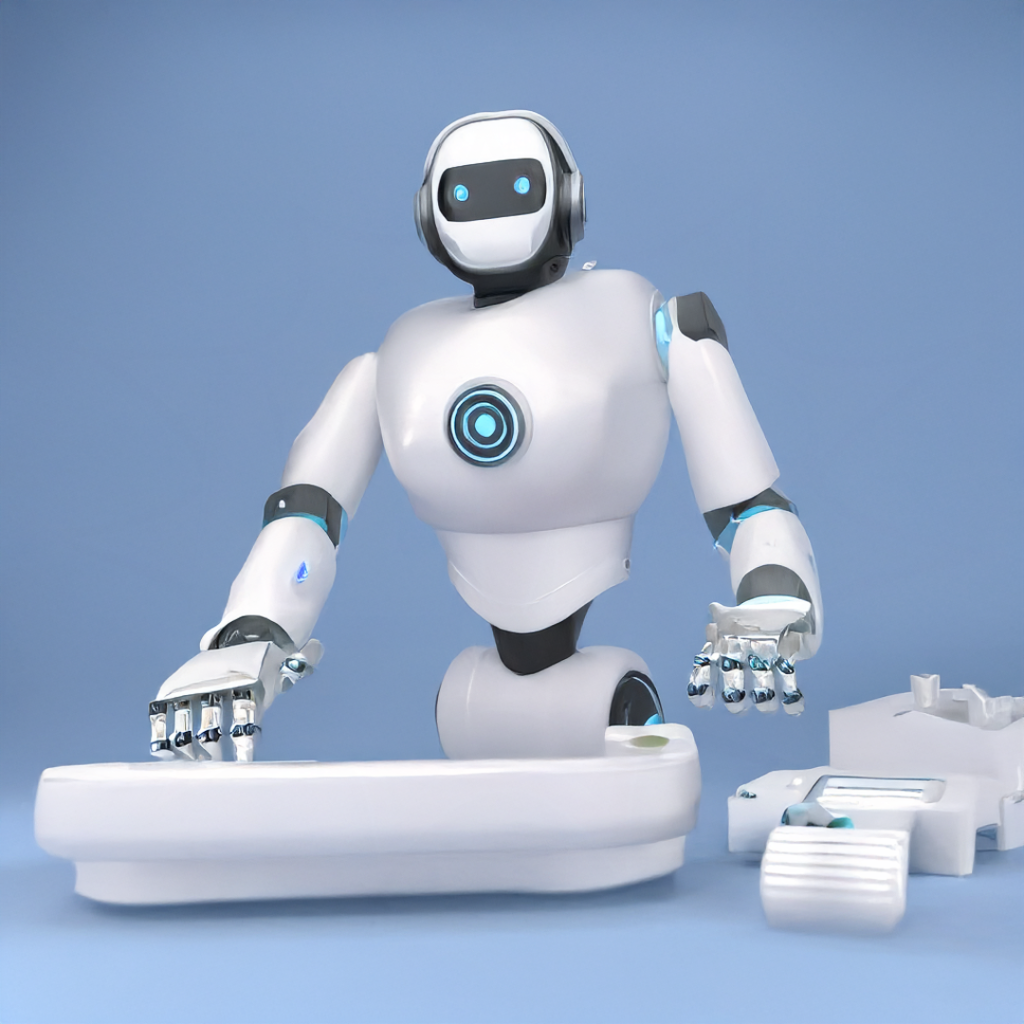
Introduction: Welcome to the World of AI Automations
Imagine a world where the repetitive, time-consuming tasks in your business simply handle themselves. No more endless data entry, no more manually sorting through emails, and no more spending hours on scheduling. This isn’t a futuristic dream; it’s the reality offered by **AI automations**. In today’s fast-paced business environment, staying competitive often means finding smarter ways to work. That’s where Artificial Intelligence (AI) steps in, not just as a fancy new technology, but as a practical partner ready to transform your operations.
This guide will cut through the tech jargon and simply explain what AI automations are, why your business needs them, and how you can start using them to boost efficiency and achieve real growth. We’ll explore how **business automation with AI** can free up your team, save money, and make your company smarter.
What Exactly Are AI Automations?
At its heart, **AI automations** involve using Artificial Intelligence to perform tasks that would normally require human effort. Think of it as giving your business a super-smart assistant that never gets tired, makes very few mistakes, and works 24/7. Unlike basic automation, which just follows a set of pre-programmed rules (like a light turning on at a specific time), AI automations can learn, adapt, and even make decisions based on data.
For example, a basic automation might send a welcome email to every new customer. An AI automation, however, might analyze a new customer’s past purchases and browsing history, then send a *personalized* welcome email with product recommendations tailored specifically for them. It’s about more than just doing tasks automatically; it’s about doing them intelligently. This intelligent approach makes processes smoother, faster, and more effective across your entire business.
Why Your Business Needs AI Automation Now
In today’s competitive landscape, standing still means falling behind. Businesses of all sizes are looking for ways to work smarter, not just harder. Here’s why **business automation with AI** isn’t just a luxury, but a necessity:
* **Free Up Valuable Time:** How many hours do your employees spend on repetitive tasks that don’t require their unique human skills? AI can take over these tasks, allowing your team to focus on creativity, strategy, and problem-solving.
* **Reduce Human Error:** We all make mistakes. AI, when properly configured, performs tasks with incredible accuracy, reducing errors in data entry, calculations, and reporting.
* **Boost Productivity:** With tasks automated, work gets done faster. This means more output, quicker turnaround times, and the ability to handle larger volumes of work without hiring more staff.
* **Gain a Competitive Edge:** Businesses using AI automations can react faster to market changes, offer better customer service, and operate more efficiently than their competitors.
Ultimately, AI automation helps your business become more agile, efficient, and ready for future challenges.
Key Benefits: Beyond Just Saving Time
While saving time is a huge advantage, **AI automations** offer a range of deeper benefits that can truly transform your business:
* **Increased Efficiency and Speed:** AI can process information and complete tasks at a speed impossible for humans. This means faster order fulfillment, quicker customer responses, and streamlined internal operations. Think about how quickly AI can sort through thousands of documents or analyze vast amounts of data.
* **Enhanced Accuracy:** Repetitive tasks are prone to human error, especially when people are tired or bored. AI systems follow rules precisely and learn from data, significantly reducing mistakes in areas like data entry, financial calculations, and inventory management. This leads to cleaner data and more reliable outcomes.
* **Significant Cost Savings:** By automating tasks, businesses can reduce the need for manual labor for certain functions, optimize resource allocation, and minimize the costs associated with errors. Over time, these savings can be substantial, improving your bottom line.
* **Improved Employee Satisfaction:** When employees are freed from mundane, repetitive work, they can focus on more engaging, creative, and strategic tasks. This leads to higher job satisfaction, better morale, and reduced burnout, making your workforce happier and more productive.
* **Better Customer Experience:** AI can power chatbots for instant support, personalize marketing messages, and optimize delivery routes, all contributing to a smoother, more satisfying experience for your customers. Faster responses and tailored interactions build loyalty and trust.
* **Scalability:** As your business grows, AI automations can scale up easily to handle increased workloads without a proportional increase in human resources. This allows for seamless expansion and sustained efficiency.
Types of Tasks AI Can Automate (AI Task Automation in Action)
Almost any repetitive task that follows a predictable pattern can be a candidate for **AI task automation**. Here are some common examples across different business functions:
* **Customer Service:** AI-powered chatbots can handle routine inquiries, answer FAQs, and even guide customers through troubleshooting steps 24/7. This frees up human agents for more complex issues and significantly improves response times.
* **Data Entry and Processing:** From invoices to customer information, AI can extract relevant data from documents, input it into systems, and even check for accuracy. This eliminates hours of manual data entry and reduces errors.
* **Email Management:** AI can sort incoming emails, flag important messages, draft responses, and even automatically route emails to the correct department or person, making your inbox much more manageable.
* **Report Generation:** Instead of manually compiling data for weekly or monthly reports, AI can gather information from various sources and generate comprehensive reports automatically, giving you up-to-date insights without the manual effort.
* **Scheduling and Calendar Management:** AI tools can help optimize meeting schedules, send reminders, and manage appointments, reducing conflicts and ensuring everyone is where they need to be.
* **Marketing and Sales:** AI can personalize product recommendations, segment customer lists for targeted campaigns, and even analyze sales data to predict future trends, making your marketing efforts much more effective.
Essential Workflow Automation Tools Powered by AI
Implementing **business automation with AI** often involves using specific **workflow automation tools**. These tools integrate AI capabilities to streamline entire processes, not just individual tasks. Here are a few types of tools you might encounter:
* **Robotic Process Automation (RPA) with AI:** RPA tools are like digital robots that mimic human actions on a computer. When combined with AI, they can not only follow rules but also understand unstructured data, make decisions, and learn from their interactions. This allows them to automate complex, multi-step workflows across different software.
* **Intelligent Document Processing (IDP) Tools:** These AI-powered tools can ‘read’ and understand information from various document types (invoices, contracts, forms), extracting relevant data, verifying it, and then inputting it into other systems. This is a massive time-saver for industries dealing with a lot of paperwork.
* **AI-Powered Customer Relationship Management (CRM) Systems:** Modern CRM platforms use AI to automate lead scoring, personalize customer interactions, predict customer behavior, and even automate follow-up tasks, ensuring no customer falls through the cracks.
* **Integration Platforms as a Service (iPaaS):** These platforms allow different software applications to ‘talk’ to each other, and with AI, they can automate data flows and triggers between systems more intelligently. For example, when a new lead enters your CRM, AI can automatically trigger a personalized email campaign and create a task for your sales team.
Choosing the right **workflow automation tools** depends on your specific needs and the tasks you want to automate.
Real-World Examples of Business Automation with AI
Let’s look at how **business automation with AI** is making a difference right now:
* **Healthcare:** Hospitals use AI to automate patient scheduling, manage medical records, and even assist in diagnosing diseases by analyzing vast amounts of data much faster than human doctors alone. This improves efficiency and patient care.
* **Retail:** Online stores employ AI to offer personalized product recommendations, manage inventory levels by predicting demand, and automate customer service via chatbots, leading to higher sales and happier customers.
* **Finance:** Banks and financial institutions use AI for fraud detection, automatically flagging suspicious transactions. They also use it to automate report generation and streamline loan application processing, making financial services faster and more secure.
* **Manufacturing:** AI automates quality control checks on assembly lines, predicts equipment maintenance needs, and optimizes production schedules, reducing downtime and improving output efficiency.
These examples show that AI isn’t just for tech giants; it’s a versatile tool benefiting businesses across all sectors.
Getting Started with AI Automation: A Simple Roadmap
Ready to dive into **AI automations**? Here’s a simple roadmap to get you started:
1. **Identify Repetitive Tasks:** Start by listing all the tasks that your employees do regularly that are repetitive, rule-based, or data-intensive. These are prime candidates for AI task automation.
2. **Start Small, Think Big:** Don’t try to automate everything at once. Pick one or two high-impact tasks that, if automated, would free up significant time or solve a major pain point. A small win can build momentum.
3. **Research Workflow Automation Tools:** Look into tools that fit your specific needs and budget. Many solutions offer trials or free tiers. Consider consulting with an expert if you’re unsure.
4. **Train Your Team:** Automation isn’t about replacing people; it’s about empowering them. Train your employees on how to work with AI tools and explain how automation will benefit them, allowing them to focus on more strategic work.
5. **Measure and Adjust:** After implementing, track the results. Are you saving time? Reducing errors? Improving customer satisfaction? Use this data to refine your automations and identify new opportunities.
Remember, the goal is continuous improvement, not perfection from day one.
Addressing Common Concerns
While the benefits are clear, it’s natural to have questions or concerns about adopting AI automations:
* **Cost:** Initial investment in **workflow automation tools** can seem daunting. However, consider the long-term ROI from increased efficiency, reduced errors, and cost savings. Many solutions offer scalable pricing.
* **Job Displacement:** A common fear is that AI will replace jobs. In reality, AI often shifts roles, taking over monotonous tasks and allowing employees to upskill into more analytical, creative, and strategic positions. It changes the nature of work, creating new opportunities.
* **Complexity:** Setting up AI automations might seem complex. However, many modern **workflow automation tools** are designed with user-friendly interfaces, and there are experts available to help with implementation.
* **Data Security:** Protecting sensitive data is crucial. Always choose reputable **AI automation** providers who prioritize robust security measures and compliance with data protection regulations.
By addressing these concerns proactively, your business can embrace AI with confidence.
Frequently Asked Questions
Is AI automation only for large corporations?
No, absolutely not! While large corporations benefit greatly, small and medium-sized businesses (SMBs) can also leverage AI automations. Many cloud-based workflow automation tools are affordable and scalable, allowing SMBs to start with small, high-impact tasks and expand as needed. The benefits of efficiency and cost savings apply to businesses of all sizes.
What is the first step to implementing AI automations in my business?
The very first step is to identify the most repetitive and time-consuming tasks within your daily operations. Look for processes that involve a lot of data entry, routine communication, or predictable sequences. Once you pinpoint these tasks, you can then research specific AI task automation solutions or workflow automation tools that are designed to handle them.
How do AI automations differ from traditional automation?
Traditional automation follows strict, pre-programmed rules (e.g., ‘if X, then do Y’). It’s great for predictable tasks. AI automations, however, go a step further by using artificial intelligence to learn from data, adapt to new situations, and even make informed decisions. This means AI can handle more complex, variable tasks and improve over time, providing a more intelligent and flexible form of automation.
Conclusion
The future of business is intertwined with technology, and **AI automations** are at the forefront of this evolution. By embracing **business automation with AI**, your company can unlock unprecedented levels of efficiency, accuracy, and innovation. From streamlining everyday operations with **AI task automation** to revolutionizing entire processes with advanced **workflow automation tools**, the possibilities are vast. Don’t let the opportunity to work smarter pass you by. Start exploring how AI can transform your business today, paving the way for a more productive, profitable, and future-ready enterprise.