
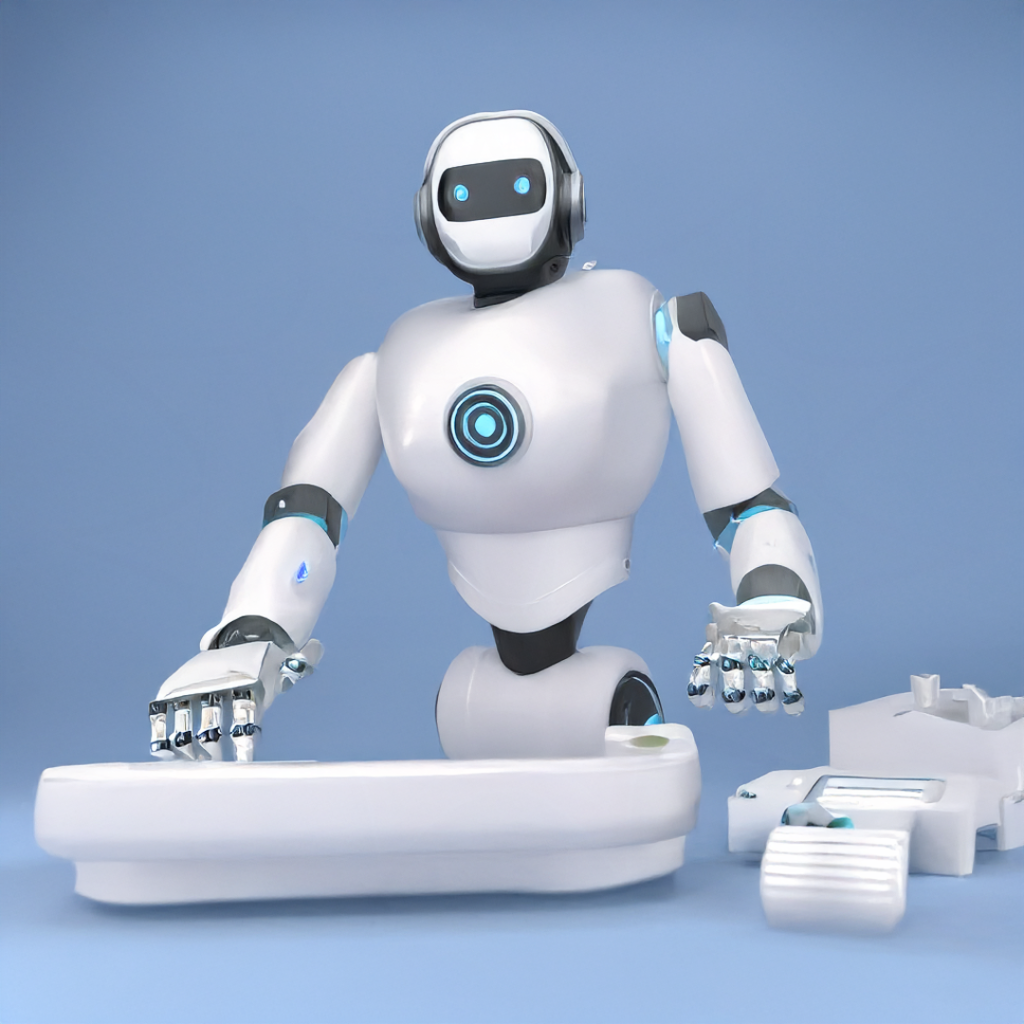
Introduction: Welcome to the World of Smarter Work
Imagine a world where repetitive, time-consuming tasks are handled automatically, freeing you and your team to focus on what truly matters: creativity, strategy, and growth. This isn’t science fiction anymore; it’s the reality brought by **AI automations**. Businesses of all sizes are discovering the incredible potential of letting artificial intelligence take over dull, routine work. This guide will walk you through what AI automation is, how it benefits your business, and the essential tools that make it all possible. Get ready to simplify your work and unlock new levels of efficiency with **business automation with AI**.
What Exactly Are AI Automations?
At its core, AI automation means using artificial intelligence to perform tasks or entire processes without human intervention. Think of it as teaching a smart assistant to do jobs that follow a set of rules or patterns. Unlike traditional automation, which is often rigid and follows exact steps, AI can learn, adapt, and even make decisions based on data. This makes **AI automations** incredibly powerful for a wide range of business functions.
For example, instead of manually sorting through hundreds of customer emails, AI can understand the content, categorize them, and even draft responses. Or, rather than spending hours inputting data, AI can extract information from documents and update your systems automatically. It’s about more than just speeding things up; it’s about making your operations smarter and more adaptive.
The Game-Changing Benefits of Business Automation with AI
Why should your business consider **business automation with AI**? The advantages are numerous and impactful:
* **Boosted Efficiency**: AI works faster and around the clock, completing tasks in minutes that might take humans hours. This dramatically speeds up operations and increases output.
* **Reduced Costs**: By automating tasks, you can reduce the need for manual labor on repetitive jobs, leading to significant savings over time. It also minimizes errors, which can be costly to fix.
* **Fewer Errors**: Machines, especially AI, are designed for precision. They don’t get tired, distracted, or make typos. This leads to much higher accuracy in data entry, calculations, and other rule-based tasks.
* **Enhanced Customer Experience**: Faster response times, personalized interactions, and 24/7 availability powered by AI can significantly improve how customers interact with your business.
* **Increased Employee Satisfaction**: By taking over tedious tasks, AI frees up your employees to focus on more engaging, strategic, and creative work. This leads to higher job satisfaction and less burnout.
* **Scalability**: AI systems can easily scale up or down to meet changing business demands without the need for extensive hiring or restructuring.
Key Areas for Business Automation with AI
AI can be applied across almost every department. Here are some prime examples where **business automation with AI** shines:
* **Customer Service**: AI-powered chatbots can handle common customer queries, provide instant support, and even guide users through troubleshooting, leaving human agents to tackle complex issues.
* **Marketing and Sales**: AI can personalize marketing campaigns, analyze customer behavior to predict buying patterns, automate lead scoring, and even generate sales reports.
* **Human Resources (HR)**: Automate resume screening, onboarding paperwork, scheduling interviews, and answering common employee questions.
* **Finance and Accounting**: AI can automate invoice processing, expense tracking, fraud detection, and even assist with financial forecasting.
* **Operations and Logistics**: Optimize supply chains, predict equipment maintenance needs, manage inventory, and automate quality control checks.
* **Data Entry and Management**: A huge time-saver! AI can extract data from various sources (documents, images, web pages) and input it directly into your databases, ensuring accuracy and consistency. This is a classic example of **AI task automation**.
Essential Workflow Automation Tools and AI
To truly harness the power of **AI automations**, you’ll need the right **workflow automation tools**. These tools act as the bridge between your existing systems and AI capabilities, allowing you to design and implement automated processes. Here are categories of tools you’ll encounter:
* **Robotic Process Automation (RPA) Platforms**: Tools like UiPath, Automation Anywhere, and Blue Prism mimic human interactions with software interfaces. They are excellent for automating repetitive, rule-based tasks across different applications without complex coding.
* **Integration Platforms as a Service (iPaaS)**: Platforms such as Zapier, Make (formerly Integromat), and Workato connect various applications and systems, allowing data to flow seamlessly between them and trigger automated workflows. For example, a new email in Gmail could automatically create a task in your project management tool.
* **AI-Powered Document Processing**: Tools that use AI to read, understand, and extract data from documents like invoices, contracts, and forms. Examples include ABBYY FlexiCapture and Hyperscience.
* **Customer Relationship Management (CRM) Systems with AI**: Many modern CRMs (e.g., Salesforce, HubSpot) now incorporate AI features for sales forecasting, lead nurturing, and personalized communication.
* **Business Process Management (BPM) Suites**: These comprehensive platforms help you map, analyze, and optimize end-to-end business processes, often integrating with AI for smarter automation.
Choosing the right tools depends on your specific needs, existing software, and the complexity of the workflows you want to automate. Many businesses start with simple iPaaS tools before moving to more advanced RPA or AI-specific solutions.
Getting Started with AI Task Automation: A Simple Roadmap
Ready to dive into **AI task automation**? Here’s a straightforward path to get started:
1. **Identify Repetitive Tasks**: Start by listing all the tasks that are done over and over again, take a lot of time, and follow predictable rules. Think about data entry, report generation, email sorting, or routine customer inquiries.
2. **Define Your Goals**: What do you want to achieve with automation? Is it saving time, reducing errors, cutting costs, or improving customer service? Clear goals will guide your choices.
3. **Choose the Right Tools**: Based on your identified tasks and goals, research and select the appropriate **workflow automation tools**. Start small if you’re new to this. Many platforms offer free trials.
4. **Start Small and Simple**: Don’t try to automate your entire business at once. Pick one or two high-impact, easy-to-automate tasks. This allows you to learn and demonstrate success quickly.
5. **Test and Refine**: Once you set up an automation, test it thoroughly. Monitor its performance, gather feedback, and be ready to make adjustments. Automation is an ongoing process of improvement.
6. **Scale Up Gradually**: As you gain confidence and see success, gradually expand your **AI automations** to more complex tasks and other areas of your business. Remember, the goal is continuous improvement and efficiency.
Challenges and the Future of AI Automations
While the benefits are huge, implementing **AI automations** isn’t without its challenges. Data quality is crucial; AI needs good data to learn and perform effectively. Security and privacy are also top concerns, especially when dealing with sensitive information. Plus, there’s the initial investment in tools and training. However, these challenges are often outweighed by the long-term gains.
The future of **business automation with AI** is incredibly exciting. We’ll see AI become even more sophisticated, capable of handling more complex tasks, understanding natural language better, and integrating seamlessly into every aspect of business operations. The line between human and machine work will blur, with AI becoming a true partner in achieving business objectives.
Frequently Asked Questions
What’s the main difference between traditional automation and AI automation?
Traditional automation follows strict, pre-programmed rules and is great for repetitive tasks that don’t change. AI automation, however, can learn from data, adapt to new situations, and even make decisions, making it suitable for more complex and dynamic processes.
Is AI automation only for large businesses?
Absolutely not! While large enterprises often have complex needs, many **workflow automation tools** and AI solutions are now affordable and accessible for small and medium-sized businesses. Starting with simple **AI task automation** can bring significant benefits regardless of company size.
Will AI automations replace human jobs?
The goal of **AI automations** is typically to automate repetitive, low-value tasks, not to eliminate entire job roles. Instead, AI often augments human capabilities, freeing employees to focus on more strategic, creative, and fulfilling work, leading to new types of jobs and increased productivity overall.
How do I choose the best workflow automation tools for my business?
Start by identifying the specific tasks you want to automate and the problems you want to solve. Then, research tools that specialize in those areas (e.g., RPA for desktop tasks, iPaaS for system integration). Consider ease of use, scalability, integration capabilities, and your budget.
Conclusion
The world of business is constantly evolving, and **AI automations** are at the forefront of this transformation. By embracing **business automation with AI**, your organization can achieve unparalleled levels of efficiency, accuracy, and innovation. From streamlining customer service to optimizing internal operations, the right **workflow automation tools** and a strategic approach to **AI task automation** can empower your team and drive substantial growth. Don’t get left behind – start exploring the power of AI to simplify your work and build a smarter, more productive future for your business today.