
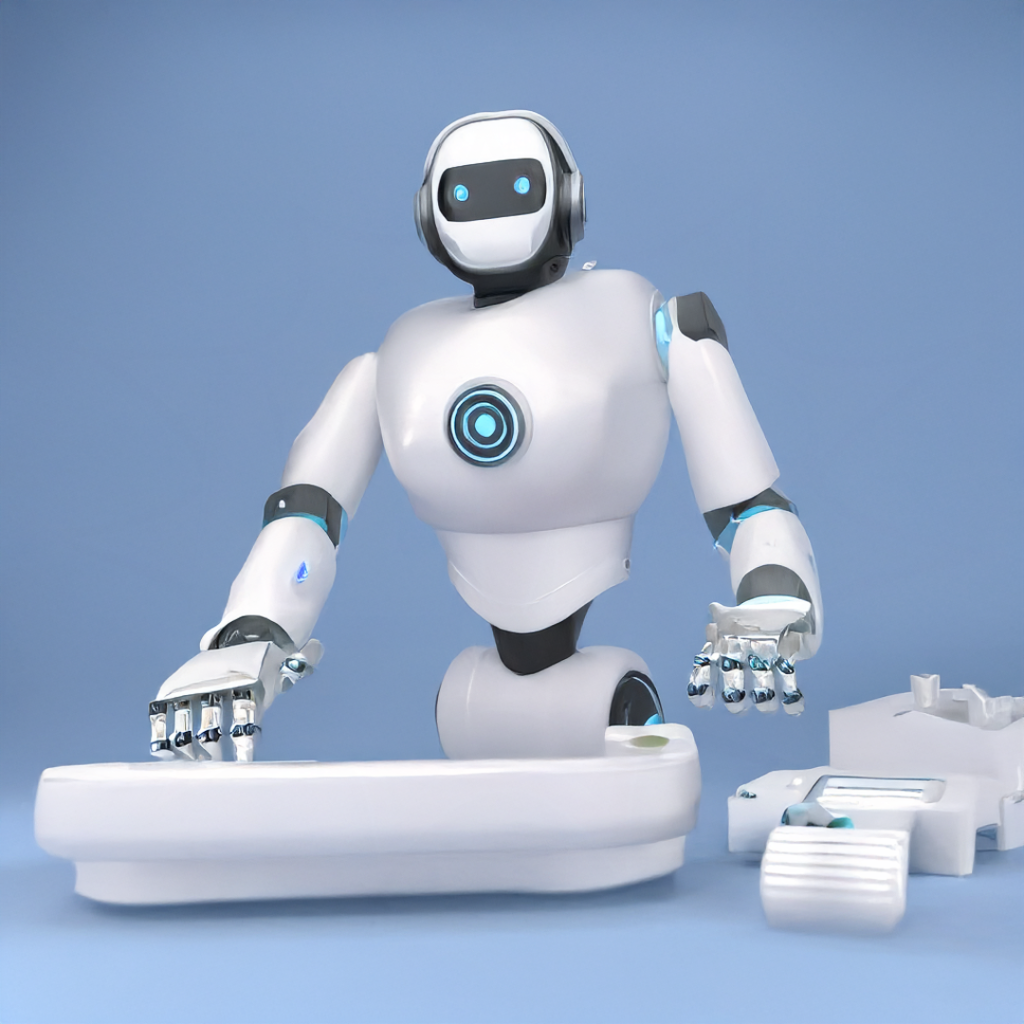
Introduction: Welcome to the World of Smart Business
Imagine a world where your most boring, repetitive tasks are handled automatically, leaving you free to focus on growth, creativity, and strategy. This isn’t science fiction; it’s the power of AI automations, and it’s changing how businesses operate every single day. In today’s fast-paced business environment, staying competitive often means working smarter, not just harder. That’s where Artificial Intelligence (AI) steps in, offering incredible opportunities to streamline operations, cut costs, and improve efficiency across the board. This guide will walk you through the basics of how AI automations can transform your company, explaining everything in simple, easy-to-understand terms. Get ready to discover how business automation with AI can unlock new levels of productivity and innovation for your team.
What Exactly Are AI Automations?
At its heart, automation is about using technology to perform tasks without human intervention. Think of it like setting a timer for your coffee machine—it starts brewing on its own. Now, add ‘intelligence’ to that. AI automations take this a step further by using artificial intelligence to make these automated tasks smarter. Instead of just following a fixed set of rules, AI-powered systems can learn, adapt, and make decisions based on data. For example, a basic automation might sort emails into folders. An AI automation, however, could understand the content of each email, prioritize urgent messages, draft replies, and even schedule meetings based on the sender’s intent. This ‘smart’ capability is what makes AI different and so powerful. It’s about letting computers do the thinking for routine jobs, making processes faster, more accurate, and much more dynamic than traditional automation ever could.
Why Your Business Needs Business Automation with AI
Adopting AI automations isn’t just about being tech-savvy; it’s about making smart business decisions that impact your bottom line. Here are some key reasons why business automation with AI is becoming essential for companies of all sizes:
* **Save Time and Money:** One of the most immediate benefits is the significant reduction in operational costs and time spent on manual tasks. AI can perform tasks much faster than humans, 24/7, without breaks. This means less labor cost, fewer errors that need correcting, and quicker turnaround times for critical processes.
* **Boost Accuracy and Reduce Errors:** Humans make mistakes, especially when performing repetitive tasks. AI systems, once correctly programmed, perform tasks with near-perfect accuracy. This is crucial for areas like data entry, financial calculations, and compliance checks, where even small errors can have big consequences.
* **Free Up Your Team for More Important Work:** Imagine your employees spending less time on data entry, scheduling, or responding to basic customer queries. AI automations take over these mundane tasks, allowing your team to focus on creative problem-solving, strategic planning, building customer relationships, and other high-value activities that truly drive your business forward.
* **Improve Customer Satisfaction:** AI-powered chatbots and support systems can provide instant, consistent service around the clock, improving response times and ensuring customers always get the help they need, even outside business hours.
* **Scale Your Operations Easily:** As your business grows, AI can handle increased workloads without necessarily needing to hire more staff. This allows you to expand efficiently and sustainably.
Key Areas Where AI Transforms Workflows
The beauty of AI automations lies in their versatility. They can be applied across almost every department, revolutionizing traditional workflows. Here are just a few key areas where business automation with AI is making a significant impact:
* **Customer Service:** This is perhaps one of the most visible applications. AI-powered chatbots can handle common customer questions, guide users through FAQs, and even resolve simple issues, freeing up human agents for more complex inquiries. AI also helps personalize customer interactions by analyzing past behaviors and preferences.
* **Marketing and Sales:** AI automates lead scoring, identifies ideal customer segments, and even helps generate personalized marketing content. From sending automated follow-up emails to optimizing ad campaigns in real-time, AI ensures your marketing efforts are more targeted and effective, driving better sales results.
* **Finance and HR:** In finance, AI can automate invoice processing, expense reporting, and fraud detection. For Human Resources, AI automates candidate screening, schedules interviews, and streamlines onboarding processes, making hiring and managing employees much more efficient.
* **Operations and Supply Chain:** AI automates inventory management by predicting demand, optimizes logistics routes, and monitors equipment for predictive maintenance, preventing costly breakdowns. These automations lead to smoother operations and reduced waste across the supply chain.
* **Data Entry and Analysis:** One of the most time-consuming tasks, data entry, can be fully automated by AI. Beyond just entering data, AI can analyze vast amounts of information, identify trends, and generate actionable insights much faster than any human, providing valuable intelligence for decision-making.
Understanding Workflow Automation Tools Powered by AI
To put AI automations into practice, businesses rely on a variety of workflow automation tools. These tools are essentially software platforms designed to connect different applications and automate multi-step processes. What makes them truly powerful is the integration of AI capabilities. Unlike older automation systems that followed rigid, pre-defined rules, modern workflow automation tools powered by AI can adapt to changing conditions and learn from new data.
For example, an AI-powered workflow tool might automatically process incoming customer requests. It doesn’t just route them to a specific department; it uses AI to understand the urgency and nature of the request, prioritize it, assign it to the most relevant expert, and even suggest a response based on past interactions. Other examples include AI-driven scheduling tools that optimize calendars based on multiple factors, or smart document processing systems that can extract information from various document types with high accuracy. These workflow automation tools are designed to be user-friendly, often featuring low-code or no-code interfaces, making it easier for businesses to set up and manage their automated processes without needing extensive technical knowledge. They are the backbone that brings the power of AI to your daily operations, making complex sequences of tasks feel effortless.
Real-World Impact: AI Task Automation in Action
The true magic of AI automations becomes clear when you look at how they handle individual, repetitive tasks – what we call AI task automation. These are the small, often tedious jobs that eat up valuable time every day. Let’s look at some real-world examples:
* **Automated Email Management:** Instead of manually sorting through hundreds of emails, AI can categorize them, flag urgent messages, and even draft initial responses for common queries like ‘What are your hours?’ or ‘How do I reset my password?’
* **Automated Report Generation:** AI can collect data from various sources (sales figures, website analytics, customer feedback) and automatically compile comprehensive reports on a daily, weekly, or monthly basis, saving hours of manual data compilation.
* **Smart Scheduling:** AI-powered tools can manage your calendar, scheduling meetings with multiple participants by finding the best available time slots for everyone, sending reminders, and updating all relevant calendars automatically.
* **Content Curation for Social Media:** AI can monitor industry news, identify trending topics, and even suggest or generate social media posts based on your brand’s voice and audience engagement data. This takes the guesswork out of content planning and ensures a consistent online presence.
* **Data Extraction from Documents:** Imagine receiving hundreds of invoices or application forms. AI task automation can automatically read these documents, extract relevant information (names, addresses, amounts), and input it directly into your databases, eliminating manual data entry errors and speeding up processing times.
How to Start Your Journey with AI Automations
Ready to bring the benefits of AI automations to your business? Here’s a simple roadmap to get started:
1. **Identify Repetitive Tasks:** Start by listing all the tasks that are done over and over again. Which ones are time-consuming, prone to human error, or simply dull? These are prime candidates for AI task automation.
2. **Research AI-Powered Tools:** Explore the market for workflow automation tools that offer AI capabilities. Many platforms are designed for specific functions (e.g., customer service, marketing, finance) or offer broad integration features. Look for user-friendly options that fit your budget and needs.
3. **Start Small and Test:** Don’t try to automate everything at once. Pick one or two high-impact, simple tasks to automate first. This allows you to learn the process, iron out any kinks, and demonstrate the value of AI to your team.
4. **Integrate and Scale:** Once your initial automations are running smoothly, look for ways to integrate them with other systems and expand to more complex workflows. Many tools connect with popular business software.
5. **Train Your Team:** AI automations are meant to empower your employees, not replace them. Provide training on how to use new tools and how their roles might evolve to focus on more strategic work. Embracing AI is a journey of continuous improvement.
Conclusion: Embrace a Smarter Future
AI automations are no longer a luxury; they are a strategic necessity for businesses looking to thrive in the modern world. By embracing business automation with AI, you can unlock unparalleled levels of efficiency, accuracy, and innovation. From leveraging powerful workflow automation tools to implementing targeted AI task automation, the possibilities for transforming your operations are endless. Start exploring how these intelligent technologies can free up your team, save resources, and position your business for sustained growth. The future of work is here, and it’s powered by AI.
Frequently Asked Questions
Is AI automation only for big companies?
Absolutely not! While large corporations use AI, many AI automation tools and platforms are now affordable and accessible for small and medium-sized businesses. There are scalable solutions that cater to various budgets and needs, making it possible for companies of all sizes to benefit.
Will AI automation replace human jobs?
AI automates tasks, not entire jobs. It’s more accurate to say AI changes job roles, freeing people from mundane, repetitive duties. This allows employees to focus on creative, strategic, and high-value work that requires uniquely human skills like critical thinking, empathy, and innovation.
Is AI automation difficult to set up?
Not necessarily. Many modern workflow automation tools powered by AI are designed with user-friendliness in mind. They often feature intuitive interfaces, drag-and-drop functionalities, and ‘low-code’ or ‘no-code’ options that allow non-technical users to set up automations without extensive programming knowledge. Starting with simple tasks also makes the setup process easier.
Conclusion
AI automations are not just a technological trend; they are a fundamental shift in how businesses can operate more intelligently and efficiently. By embracing business automation with AI, companies of all sizes can transform their workflows, empower their employees, and achieve new levels of success. The tools and knowledge are available; the time to act is now. Start small, learn, and watch your business thrive in the era of smart automation.