
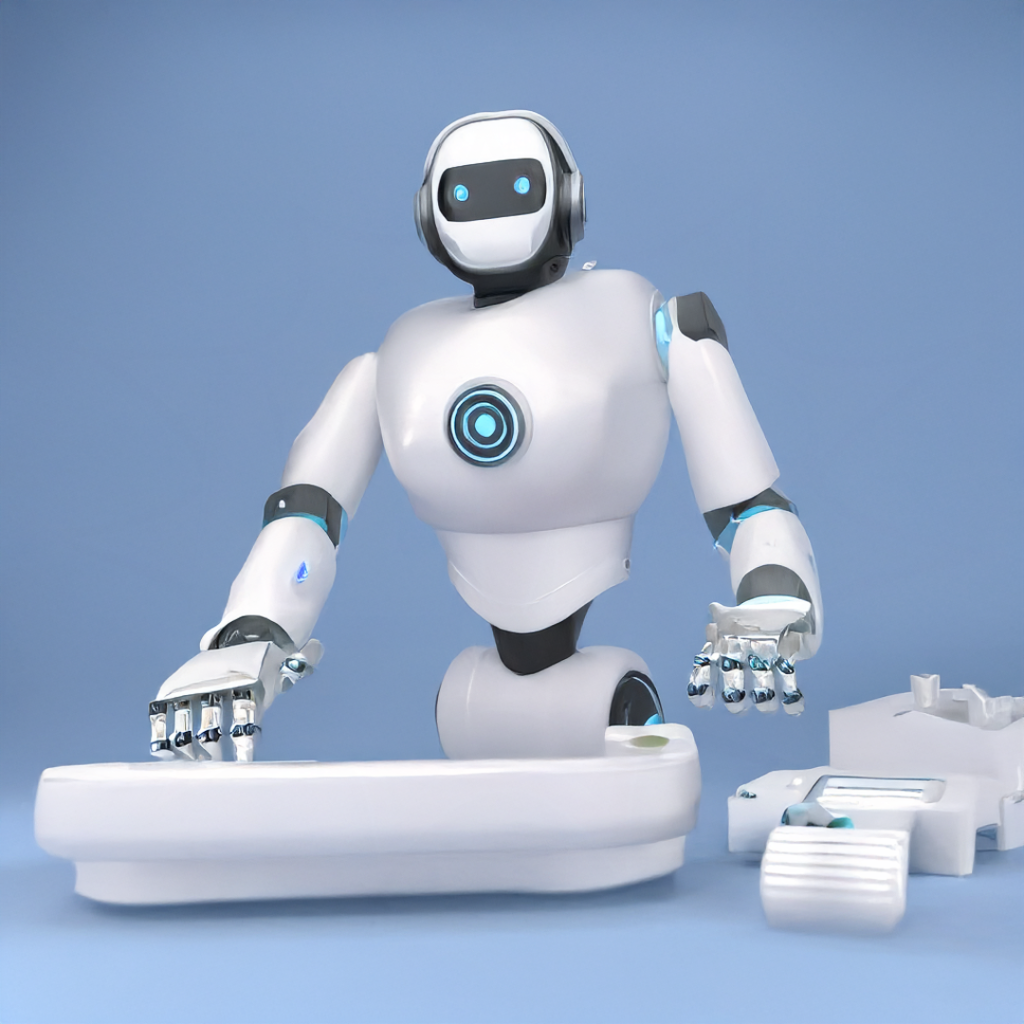
Introduction: What Are AI Automations and Why Do They Matter?
In today’s fast-paced world, businesses are always looking for ways to do more with less. This is where AI automations come in. You might have heard about Artificial Intelligence (AI) and how it’s changing things, but what does it really mean for your day-to-day business operations? Simply put, AI automations are about using smart computer programs to handle tasks that people usually do. This can range from simple, repetitive jobs to more complex decisions, all without needing constant human input.
Think of it like having an extra set of incredibly fast, accurate, and tireless employees. These aren’t just robots doing basic actions; AI adds intelligence, meaning these systems can learn, adapt, and even make choices. For businesses, this is huge. It means more efficiency, fewer mistakes, and more time for your team to focus on creative and strategic work that truly needs human thought. Understanding and using AI automations isn’t just a trend; it’s becoming a key way to keep your business competitive and growing.
The Power of Business Automation with AI
When we talk about business automation with AI, we’re discussing how AI technology is used to streamline and optimize various business processes. This isn’t just about making things faster; it’s about making them smarter. Imagine a world where your sales team spends less time on paperwork and more time building relationships, or your customer service team can answer common questions instantly, 24/7. That’s the promise of AI in business.
**Benefits of Integrating AI into Your Business Operations:**
1. **Boosted Efficiency:** AI can process huge amounts of data and complete tasks much quicker than any human. This means operations that used to take hours or days can now be done in minutes.
2. **Reduced Costs:** By automating tasks, businesses can save money on labor costs and reduce the resources needed for repetitive jobs. Fewer errors also mean less time and money spent on corrections.
3. **Improved Accuracy:** AI systems are designed to follow rules and analyze data without getting tired or making human errors. This leads to more consistent and accurate results.
4. **Better Customer Experience:** AI can power chatbots, personalized recommendations, and faster support, leading to happier customers.
5. **Enhanced Decision Making:** With AI analyzing data, businesses get deeper insights, helping them make smarter, data-driven decisions faster.
6. **Scalability:** AI automations can easily handle increased workloads without needing to hire more people, making it easier for businesses to grow.
Practical Examples of AI Task Automation
So, where can you actually use AI task automation in your business? The possibilities are vast and growing every day. Here are some common areas where AI is already making a big difference:
* **Customer Service:** Chatbots are a prime example. These AI-powered tools can answer frequently asked questions, guide customers through troubleshooting steps, and even process simple requests without human intervention. This frees up human agents to handle more complex issues, improving overall service quality and response times.
* **Marketing:** AI can automate email campaigns, personalize content for different audience segments, and even manage social media posts. It can analyze customer data to predict what products they might like, helping businesses create more effective marketing strategies and run targeted ads.
* **Sales:** AI task automation can help qualify leads by analyzing their likelihood to purchase, automate follow-up emails, and even schedule meetings. Sales teams can then focus on nurturing the most promising leads and closing deals, rather than administrative tasks.
* **Human Resources (HR):** AI can automate parts of the hiring process, like reviewing resumes and scheduling interviews. It can also manage employee onboarding tasks, answer common HR questions, and help with performance analysis, making HR more efficient and freeing up staff for more strategic roles.
* **Data Entry and Analysis:** Many businesses deal with vast amounts of data. AI can automatically extract information from documents, organize it, and even analyze it to find trends and insights. This drastically reduces manual data entry errors and provides valuable information for decision-making.
* **IT Operations:** AI can monitor systems for potential issues, automatically resolve minor problems, and even predict when equipment might fail. This proactive approach helps prevent downtime and keeps IT systems running smoothly.
Exploring Workflow Automation Tools Driven by AI
Beyond individual tasks, AI is also revolutionizing entire workflows. Workflow automation tools, when powered by AI, can connect different systems and processes to create seamless, automated sequences. Imagine a customer placing an order online. Traditionally, this might involve manual steps for inventory checks, payment processing, shipping label creation, and customer communication.
With AI-powered workflow automation tools, this entire process can be largely automated. Once an order is placed, the AI system can:
1. **Check inventory levels** and automatically update them.
2. **Process the payment** and send a confirmation to the customer.
3. **Generate a shipping label** and notify the fulfillment team.
4. **Send tracking information** to the customer automatically.
If there’s an issue, like a low stock item, the AI can flag it for human review or even suggest alternatives. These tools often use ‘if-then’ logic but with the added intelligence of AI to handle variations and learn over time. Popular examples include platforms that integrate with CRMs (Customer Relationship Management) and ERPs (Enterprise Resource Planning) to automate sales pipelines, marketing funnels, and supply chain management.
Choosing the right workflow automation tools depends on your business’s specific needs, but many user-friendly options are available that don’t require deep technical knowledge to set up. They help orchestrate complex operations, ensuring smooth transitions between steps and reducing the chances of human oversight.
Getting Started with AI Automations in Your Business
Integrating AI automations into your business might seem like a big step, but it doesn’t have to be overwhelming. Here’s a simple path to begin your journey:
1. **Identify Repetitive Tasks:** Start by looking for tasks that your team does over and over again. These are often the best candidates for AI task automation. Think about data entry, sending standard emails, or answering common customer questions.
2. **Start Small:** You don’t need to automate your entire business at once. Pick one or two key areas where automation could make a significant impact. A small success can build confidence and demonstrate the value of AI.
3. **Research Workflow Automation Tools:** Look into different tools available. Many platforms offer free trials or basic versions that you can experiment with. Focus on tools that are easy to use and can integrate with your existing software.
4. **Educate Your Team:** Explain to your employees how AI automations will help them, not replace them. Show them how it will free up their time for more rewarding and strategic work. Training is key for smooth adoption.
5. **Measure and Adjust:** Once you implement an automation, track its performance. Is it saving time? Reducing errors? Use this feedback to fine-tune your automation and identify new areas for improvement.
Remember, the goal of business automation with AI is to make work easier and more effective for everyone involved.
Challenges and Considerations When Adopting AI
While AI automations offer many advantages, it’s also important to be aware of potential challenges and how to address them.
* **Initial Setup:** Setting up AI systems can take time and resources. It might require an initial investment in software and possibly training for your staff.
* **Data Quality:** AI systems learn from data. If your data is messy or inaccurate, the AI’s performance will suffer. Ensuring clean, relevant data is crucial for effective automation.
* **Ethical Concerns:** As AI becomes smarter, questions about data privacy and algorithmic bias arise. It’s important to use AI responsibly and ensure transparency in its operations.
* **Integration Issues:** Sometimes, new AI tools might not seamlessly integrate with older systems, requiring custom solutions or upgrades.
* **Employee Adaptation:** Some employees might be hesitant about AI, fearing job displacement. Clear communication and training are essential to show how AI empowers employees rather than replaces them.
By planning carefully and addressing these points, businesses can smoothly adopt AI automations and fully leverage their benefits.
Frequently Asked Questions
What is the simplest definition of AI automation?
AI automation means using smart computer programs (Artificial Intelligence) to automatically do tasks that people usually do, like answering emails or organizing data, helping businesses work faster and smarter.
How can small businesses benefit from AI automations?
Small businesses can benefit greatly by saving time and money on repetitive tasks, improving customer service with chatbots, making marketing more effective, and gaining insights from data, allowing them to compete with larger companies.
Are workflow automation tools expensive?
The cost of workflow automation tools varies widely. Many offer free basic versions or trials, while more advanced tools with extensive features can have subscription fees. It’s important to evaluate the potential cost savings and efficiency gains against the investment.
Will AI task automation replace human jobs?
While AI automates repetitive tasks, it generally doesn’t replace entire jobs. Instead, it changes job roles, freeing up human employees to focus on more creative, strategic, and complex problem-solving tasks that require unique human skills. AI often works alongside people, making them more productive.
Conclusion
Embracing AI automations is no longer a luxury but a necessity for businesses looking to thrive. From simple AI task automation to sophisticated business automation with AI and powerful workflow automation tools, the ability to streamline operations, reduce costs, and enhance decision-making is within reach. By taking a thoughtful approach, starting small, and focusing on areas where AI can make the biggest impact, any business can unlock new levels of efficiency and set itself up for future success. The future of work is here, and it’s smarter, faster, and more automated thanks to AI.