
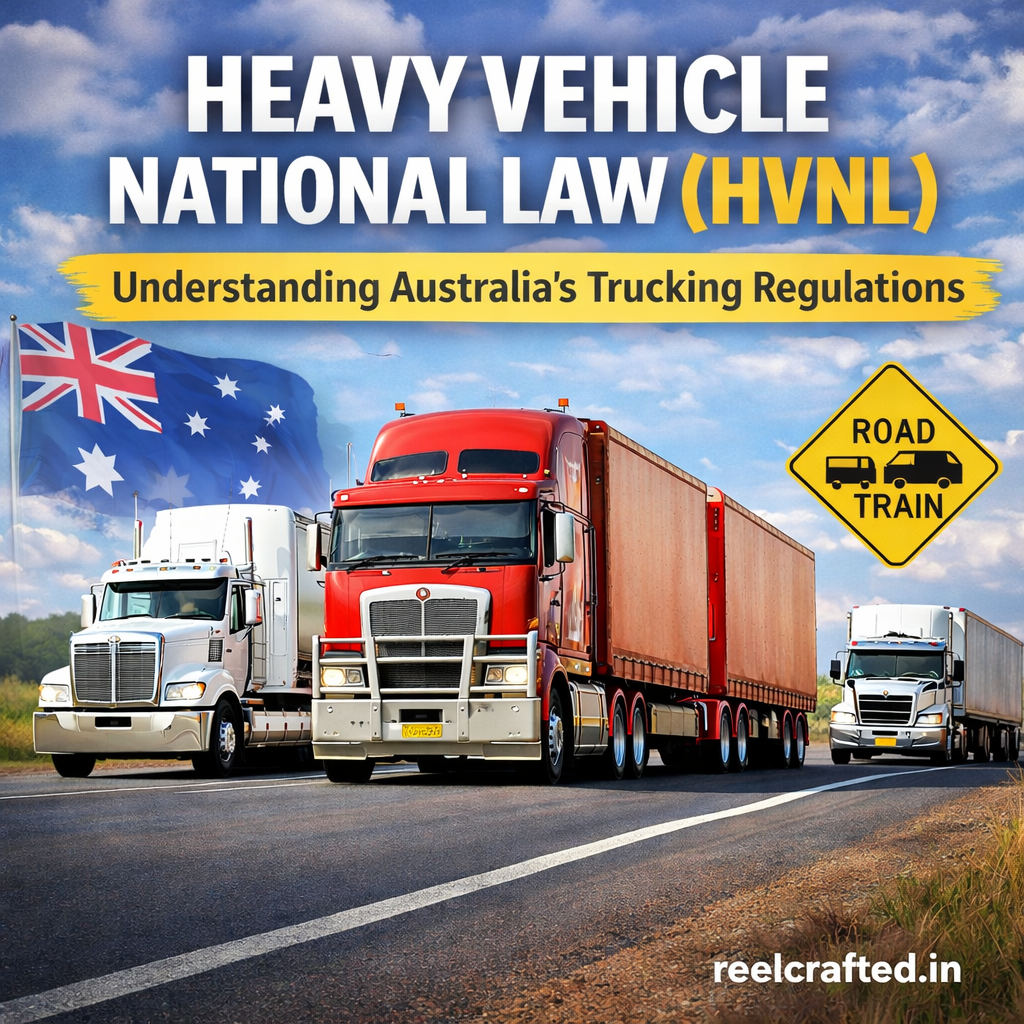
Learn what the Heavy Vehicle National Law (HVNL) is, who it applies to, key rules on fatigue, speed, loading, Chain of Responsibility, penalties, and how to stay compliant in Australia.
Introduction
Australia’s freight and logistics sector keeps the nation moving—supplying food, fuel, construction materials, and everyday goods across vast distances. To make sure this movement is safe, fair, and consistent, most Australian states and territories operate under a single framework called the Heavy Vehicle National Law (HVNL).
Written for the general audience, this guide explains what HVNL is, why it exists, who it applies to, and how it affects drivers, businesses, and everyday road users—without legal jargon.
What Is the Heavy Vehicle National Law (HVNL)?
The Heavy Vehicle National Law (HVNL) is a uniform set of road transport laws that regulate the operation of heavy vehicles across most of Australia.
A heavy vehicle under HVNL generally means any vehicle or combination with a Gross Vehicle Mass (GVM) over 4.5 tonnes. This includes:
- Trucks and trailers
- Buses and coaches
- Road trains
- Heavy rigid and articulated vehicles
The law aims to improve safety, protect infrastructure, and create consistency across state borders so operators don’t face different rules in every region.
Why Was HVNL Introduced?
Before HVNL, each state had its own heavy vehicle rules. This caused:
- Confusion for interstate drivers
- Higher compliance costs for businesses
- Safety gaps and enforcement inconsistencies
HVNL was introduced to:
- ✔ Improve road safety
- ✔ Reduce red tape
- ✔ Protect roads and bridges
- ✔ Hold everyone in the supply chain accountable
Where Does HVNL Apply?
HVNL currently applies in:
- New South Wales
- Victoria
- Queensland
- South Australia
- Tasmania
- Australian Capital Territory
⚠️ Western Australia and Northern Territory have their own heavy vehicle laws, though they align with HVNL in many areas.
Who Enforces HVNL?
The law is administered by the National Heavy Vehicle Regulator (NHVR), working alongside state police and road authorities.
The NHVR:
- Issues heavy vehicle permits
- Oversees compliance and enforcement
- Manages fatigue and accreditation schemes
- Provides education and guidance
Who Must Comply with HVNL?
HVNL applies to more than just drivers. It uses a system called Chain of Responsibility (CoR).
Chain of Responsibility (CoR)
CoR means everyone who influences a transport task is legally responsible for safety, including:
- Drivers
- Employers
- Operators
- Schedulers
- Loaders and packers
- Consignors and consignees
If someone in the chain causes or encourages unsafe practices, they can be held legally accountable.
Key Areas Covered Under HVNL
1. Fatigue Management
Fatigue is one of the biggest causes of heavy vehicle accidents. HVNL strictly controls:
- Driving hours
- Rest breaks
- Work diaries
Drivers must:
- Take mandatory rest periods
- Keep accurate records
- Follow Standard Hours, Basic Fatigue Management (BFM), or Advanced Fatigue Management (AFM) rules
2. Speed Compliance
Drivers must always obey:
- Posted speed limits
- Vehicle speed limiters
Businesses must ensure schedules do not pressure drivers to speed. Speeding breaches can result in:
- Heavy fines
- Demerit points
- License suspension
3. Mass, Dimension & Loading
HVNL sets rules for:
- Maximum vehicle weight (mass)
- Height, width, and length (dimensions)
- Load restraint
Poor loading can cause:
- Rollovers
- Road damage
- Fatal accidents
Load restraint must prevent:
- Shifting
- Falling
- Spillage
4. Vehicle Standards & Maintenance
Vehicles must be:
- Roadworthy at all times
- Properly maintained
- Free from safety defects
Operators must ensure:
- Regular inspections
- Maintenance records
- Immediate repairs of safety issues
5. Heavy Vehicle Permits
Special permits are required for:
- Oversized vehicles
- Over-mass loads
- Special purpose vehicles
Driving without the correct permit is a serious HVNL offence.
Penalties Under HVNL
HVNL penalties are strict and can include:
- On-the-spot fines
- Court-imposed penalties
- Demerit points
- License disqualification
- Business sanctions
Under Chain of Responsibility, company directors and managers can also face personal penalties if they fail to manage safety risks.
How HVNL Improves Road Safety
HVNL helps:
- Reduce fatigue-related crashes
- Prevent overloading
- Improve vehicle standards
- Encourage shared responsibility
This protects:
- Truck drivers
- Other road users
- Pedestrians
- Public infrastructure
How Businesses Can Stay Compliant
To comply with HVNL, businesses should:
- Train drivers and staff regularly
- Use realistic scheduling
- Monitor fatigue and speed
- Maintain vehicles properly
- Keep accurate records
- Encourage safety-first culture
Compliance is not just about avoiding fines—it’s about saving lives.
Why HVNL Matters to the General Public
Even if you don’t drive a truck, HVNL affects you because:
- You share the road with heavy vehicles
- Safe freight keeps store shelves stocked
- Infrastructure damage costs taxpayers
- Road safety affects everyone
HVNL ensures heavy vehicles operate responsibly for the benefit of the entire community.
Common Myths About HVNL
Myth: Only drivers are responsible
Fact: Everyone in the supply chain shares responsibility
Myth: Compliance is optional
Fact: HVNL is legally enforceable with serious penalties
Myth: HVNL is too complex
Fact: With proper guidance and systems, compliance is manageable
The Future of HVNL
HVNL continues to evolve with:
- Stronger Chain of Responsibility laws
- Digital work diaries
- Better enforcement technology
- Focus on safety outcomes rather than paperwork
These changes aim to modernize Australia’s transport industry.
What to Expect in 2026:
- Implementation of HVNL changes from mid-year.
- New online training resources from AIHS becoming available.
- Continued discussions and potential new state/territory-level policies based on Austroads and industry recommendations to fast-track training.
To stay updated, monitor announcements from the National Heavy Vehicle Regulator (NHVR), NatRoad, and Australian Trucking Association (ATA).
Conclusion
The Heavy Vehicle National Law (HVNL) is the backbone of safe and consistent heavy vehicle regulation in Australia. By setting clear rules around fatigue, speed, loading, vehicle standards, and shared responsibility, HVNL protects drivers, businesses, and the public alike.
Whether you’re a driver, operator, business owner, or everyday road user, understanding HVNL helps create safer roads and a stronger transport system for everyone.
Q1. What vehicles are covered under HVNL?
Any vehicle or combination with a GVM over 4.5 tonnes, including trucks, buses, and trailers.
Q2. Does HVNL apply across all of Australia?
No. It applies in most states and territories, but WA and NT have their own systems.
Q3. Who enforces HVNL rules?
The National Heavy Vehicle Regulator (NHVR) along with state enforcement agencies.
Q4. What is Chain of Responsibility?
It means everyone involved in a transport task shares legal responsibility for safety.
Q5. What happens if HVNL rules are broken?
Penalties can include fines, license suspension, business sanctions, and court action.
Start Your Truck Driving Career Today
If you’re ready for a stable career with strong demand and great pay, contact:
0433 266 831
https://gurutruckdrivingschool.com.au/
National Heavy Vehicle Regulator (NHVR) – Related Resources
The :contentReference[oaicite:0]{index=0} (NHVR) is responsible for administering the Heavy Vehicle National Law (HVNL) across most of Australia. Explore the official resources below for detailed guidance and compliance information.
- NHVR Role & Responsibilities – About the Regulator
- HVNL Compliance Requirements & Regulations
- NHVR Safety Standards & Vehicle Inspection Guidelines
- Heavy Vehicle Permits & Route Planner (NHVR)
- Work Diary Rules & Fatigue Management Requirements
- Heavy Vehicle Work Diary & Record Keeping Rules
- NHVR National Notices & Permit-Based Schemes
- NHVR Accreditation Schemes – BFM & AFM Explained
- NHVR Go Portal – Permits, Services & Applications