
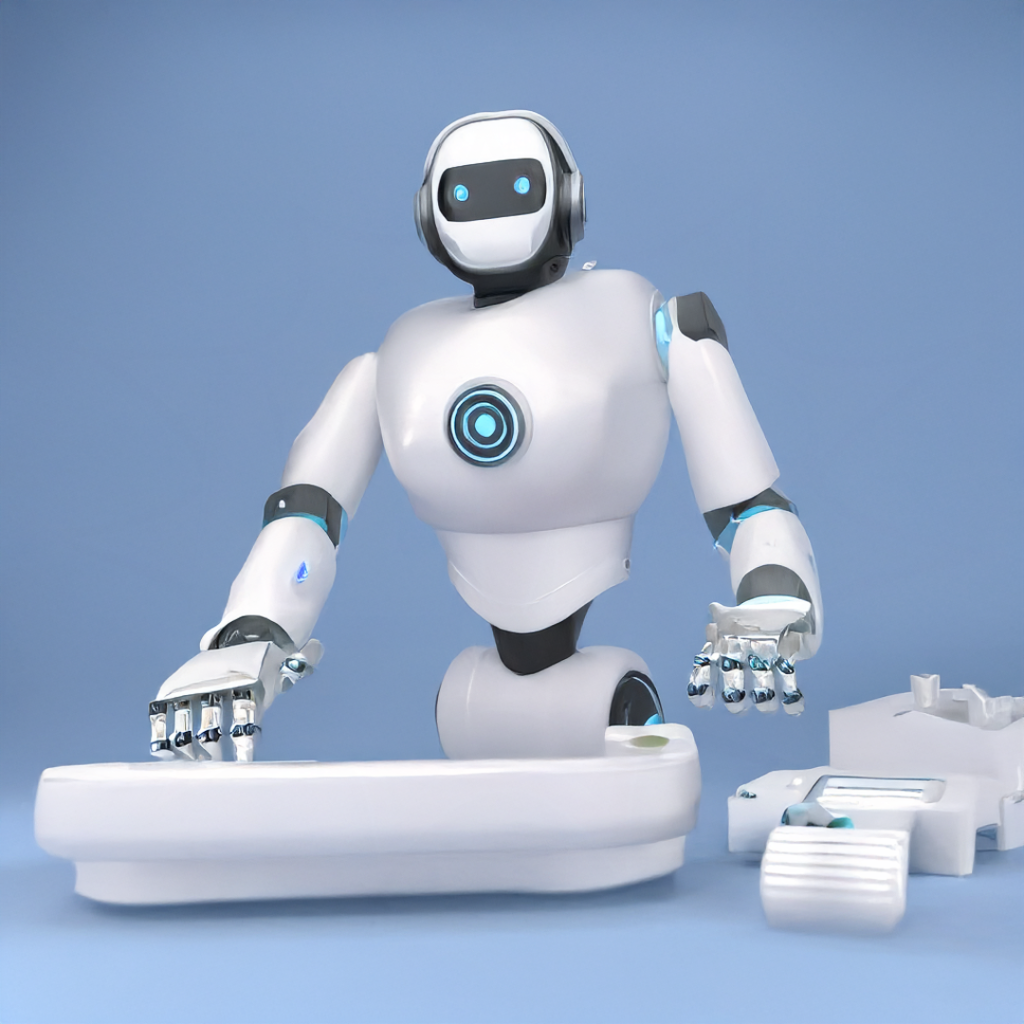
Say Goodbye to Repetitive Tasks: Welcome to the World of AI Automations
Imagine a world where your most boring, repetitive tasks are handled automatically, leaving you and your team free to focus on what truly matters: creativity, strategy, and making your customers happy. This isn’t a futuristic dream; it’s the present reality thanks to **AI automations**. In today’s fast-paced business environment, staying competitive means working smarter, not just harder. That’s where Artificial Intelligence (AI) steps in, transforming the way businesses operate.
AI automations refer to using smart computer programs to perform tasks that used to require human input. Think of it as having a tireless, super-efficient assistant that never makes mistakes. From sorting emails to analyzing data, these systems are designed to streamline your daily operations, making everything smoother and more efficient. If you’ve been hearing about AI and wondering how it can specifically help your business, you’re in the right place. We’re going to break down what AI automations are, why they’re essential, and how you can start using them today to revolutionize your workflow.
What Exactly Are AI Automations?
At its core, **AI automations** involve machines taking over routine, predictable tasks that are typically done by people. But it’s more than just simple automation; AI brings a level of intelligence to the process. Unlike traditional automation, which follows a strict set of rules, AI can learn, adapt, and even make decisions based on data.
Think about the difference: a traditional automatic light turns on when it senses motion. An AI-powered light might learn your habits, understand the time of day, and even consider the natural light levels before deciding when and how brightly to turn on. For businesses, this means AI can handle more complex scenarios. It can read and understand documents, analyze customer sentiments from emails, or predict sales trends, and then act on those insights automatically. This capability is what makes **business automation with AI** so powerful. It’s not just doing tasks; it’s doing them intelligently, often better and faster than humans can, and freeing up human talent for more strategic work.
Why Your Business Can’t Afford to Ignore AI Automation
In a world where every minute and every dollar counts, **business automation with AI** offers undeniable advantages. Here’s why it’s becoming a must-have for companies of all sizes:
* **Saves Time and Money:** By automating repetitive tasks like data entry, invoicing, or report generation, your employees gain hours back in their day. This direct saving translates into reduced operational costs and allows your team to focus on higher-value activities that directly impact your bottom line.
* **Reduces Errors:** Humans make mistakes; AI, when programmed correctly, doesn’t. Automating tasks minimizes the risk of human error, ensuring accuracy in data, calculations, and communications.
* **Boosts Productivity:** With AI handling the busywork, your employees can dedicate their energy to creative problem-solving, customer engagement, and strategic planning. This leads to a more productive and motivated workforce.
* **Improves Customer Experience:** AI-powered chatbots can provide instant customer support 24/7, answering common questions and guiding customers, leading to faster resolutions and happier clients. Personalized marketing messages and quick service responses are also hallmarks of effective AI automation.
* **Scalability:** As your business grows, AI automations can scale easily to handle increased workloads without needing to hire more staff for routine tasks. This flexibility is crucial for sustainable growth.
Key Areas Where AI is Transforming Business Workflows
The beauty of **AI automations** is their versatility. They can be applied across nearly every department of your business. Here are some key areas seeing massive transformations:
* **Customer Service:** AI-powered chatbots and virtual assistants can handle common queries, guide customers through processes, and even provide personalized recommendations, freeing up human agents for more complex issues. Automated sentiment analysis can flag urgent customer complaints.
* **Marketing & Sales:** AI can personalize email campaigns, suggest optimal times for social media posts, analyze customer behavior to identify sales leads, and even generate basic marketing copy. This level of precision and speed significantly enhances outreach efforts.
* **Human Resources (HR):** Automating initial resume screening, scheduling interviews, onboarding new employees, and even answering common HR questions can save countless hours for HR teams.
* **Finance & Accounting:** Tasks like invoice processing, expense categorization, fraud detection, and financial reporting can be largely automated, leading to greater accuracy and faster financial insights.
* **Operations & Logistics:** Inventory management, supply chain optimization, predictive maintenance for equipment, and even route planning for deliveries can all be enhanced with AI, making operations smoother and more cost-effective.
Essential Workflow Automation Tools Driven by AI
To start leveraging the power of AI, you’ll need the right **workflow automation tools**. These tools are the engines that power your AI automations, bringing intelligence and efficiency to your daily operations. They come in many forms, each designed to tackle different aspects of your business:
* **Robotic Process Automation (RPA) Tools:** These tools are like digital robots that mimic human actions to interact with software systems. They can open applications, copy and paste data, move files, and fill out forms. When combined with AI, RPA bots can make decisions, understand unstructured data, and adapt to changes, making them incredibly powerful for routine, high-volume tasks.
* **AI-Powered CRM Systems:** Customer Relationship Management (CRM) platforms are becoming smarter with AI integration. They can automatically log customer interactions, suggest next steps for sales reps, predict customer churn, and personalize communication, improving customer satisfaction and sales efficiency.
* **Intelligent Document Processing (IDP):** These tools use AI to read, understand, and extract data from various documents like invoices, contracts, and forms. This eliminates manual data entry, reduces errors, and speeds up processing times.
* **Business Process Management (BPM) Suites with AI:** These comprehensive platforms help you map, analyze, improve, and automate complex business processes. With AI, they can identify bottlenecks, suggest process improvements, and automatically trigger actions based on predefined rules and learned patterns.
* **No-Code/Low-Code Automation Platforms:** These platforms allow even non-technical users to build sophisticated automations using drag-and-drop interfaces, often integrating AI features for advanced capabilities without needing complex coding.
Practical Examples of AI Task Automation in Action
Let’s look at some real-world examples of how **AI task automation** can directly benefit your business:
* **Automated Customer Support Responses:** A customer emails with a common question about shipping. An AI system identifies the question, pulls the answer from your knowledge base, and sends a personalized response instantly, all without human intervention.
* **Intelligent Lead Scoring:** Your sales team receives hundreds of leads daily. An AI system analyzes each lead’s behavior, demographics, and engagement data to score them, highlighting the most promising ones for immediate follow-up.
* **Expense Report Processing:** Employees submit expense reports with receipts. An AI system scans the receipts, extracts relevant data (vendor, amount, date), categorizes the expense, and routes it for approval automatically, drastically speeding up reimbursement.
* **Personalized Product Recommendations:** An e-commerce website uses AI to analyze a customer’s browsing and purchase history to suggest products they are most likely to buy, increasing conversion rates.
* **Content Generation & Curation:** For marketing teams, AI can generate first drafts of social media posts, email subject lines, or even blog outlines, saving writers significant time. It can also curate relevant news articles for internal newsletters.
* **Automated Data Entry & Migration:** Moving data from old systems to new ones, or entering data from physical forms into digital databases, can be done quickly and accurately by AI, eliminating tedious manual work.
Getting Started with AI Automations: A Simple Roadmap
Diving into **AI automations** might seem daunting, but it doesn’t have to be. Here’s a simple, step-by-step approach to get your business started:
1. **Identify Repetitive Tasks:** Start by listing all the tasks that are done over and over again, are rule-based, or involve large amounts of data. These are prime candidates for AI automation.
2. **Start Small:** Don’t try to automate everything at once. Pick one or two high-impact, easy-to-automate tasks first. A successful small project builds confidence and demonstrates value.
3. **Research Workflow Automation Tools:** Explore different **workflow automation tools** and platforms. Many offer free trials or demos. Look for user-friendly interfaces, good support, and scalability.
4. **Train Your Team:** AI isn’t meant to replace your team, but to empower them. Provide training on how to use new automated systems and how their roles might evolve to focus on more strategic work.
5. **Measure and Adjust:** Once you’ve implemented an automation, track its performance. Is it saving time? Reducing errors? Improving customer satisfaction? Use data to make informed adjustments and improvements.
6. **Seek Expert Advice (If Needed):** If you’re unsure where to start or encounter complex challenges, consider consulting with AI automation specialists who can guide you through the process.
Overcoming Common Challenges
While the benefits are clear, implementing **AI automations** can come with a few hurdles. One common challenge is data quality; AI systems are only as good as the data they’re fed. Ensuring your data is clean, consistent, and readily available is crucial. Another aspect is integration – making sure new AI tools play nicely with your existing software can sometimes require technical expertise. Finally, there’s the human element. Managing change and ensuring your employees understand how AI will improve their jobs, rather than threaten them, is vital for successful adoption. With careful planning and a focus on incremental improvements, these challenges can be effectively navigated, paving the way for a more efficient and innovative business future.
Frequently Asked Questions
What kind of businesses can benefit from AI automations?
All types of businesses, regardless of size or industry, can benefit from AI automations. From small businesses looking to save time on administrative tasks to large enterprises optimizing complex supply chains, AI offers solutions for greater efficiency and productivity.
Is AI automation difficult to set up?
Not necessarily. While some advanced AI systems can be complex, many modern **workflow automation tools** are designed with user-friendly interfaces (no-code/low-code platforms). You can start with simple **AI task automation** for specific repetitive tasks and gradually expand as you gain experience.
Will AI automation replace my employees?
The goal of **business automation with AI** is generally not to replace employees but to free them from mundane, repetitive tasks. This allows your team to focus on higher-value activities that require human creativity, critical thinking, and empathy, making their jobs more engaging and productive.
How much does AI automation cost?
Costs vary widely depending on the tools, complexity, and scale of implementation. Many cloud-based **workflow automation tools** operate on a subscription model, offering different tiers based on features and usage. It’s an investment that typically yields significant returns in time and cost savings.
Conclusion
The future of business is intelligent, efficient, and automated. By embracing **AI automations**, your company can unlock unprecedented levels of productivity, reduce operational costs, and create a more engaging environment for your employees and customers alike. The journey begins by identifying those tedious, repetitive tasks and exploring the powerful **workflow automation tools** available today. Don’t let the complexity deter you; start small, learn, and grow. The benefits of **business automation with AI** are within reach, promising a smarter, more successful path forward for your enterprise. It’s time to let AI do the heavy lifting, so you can focus on innovation and growth.