
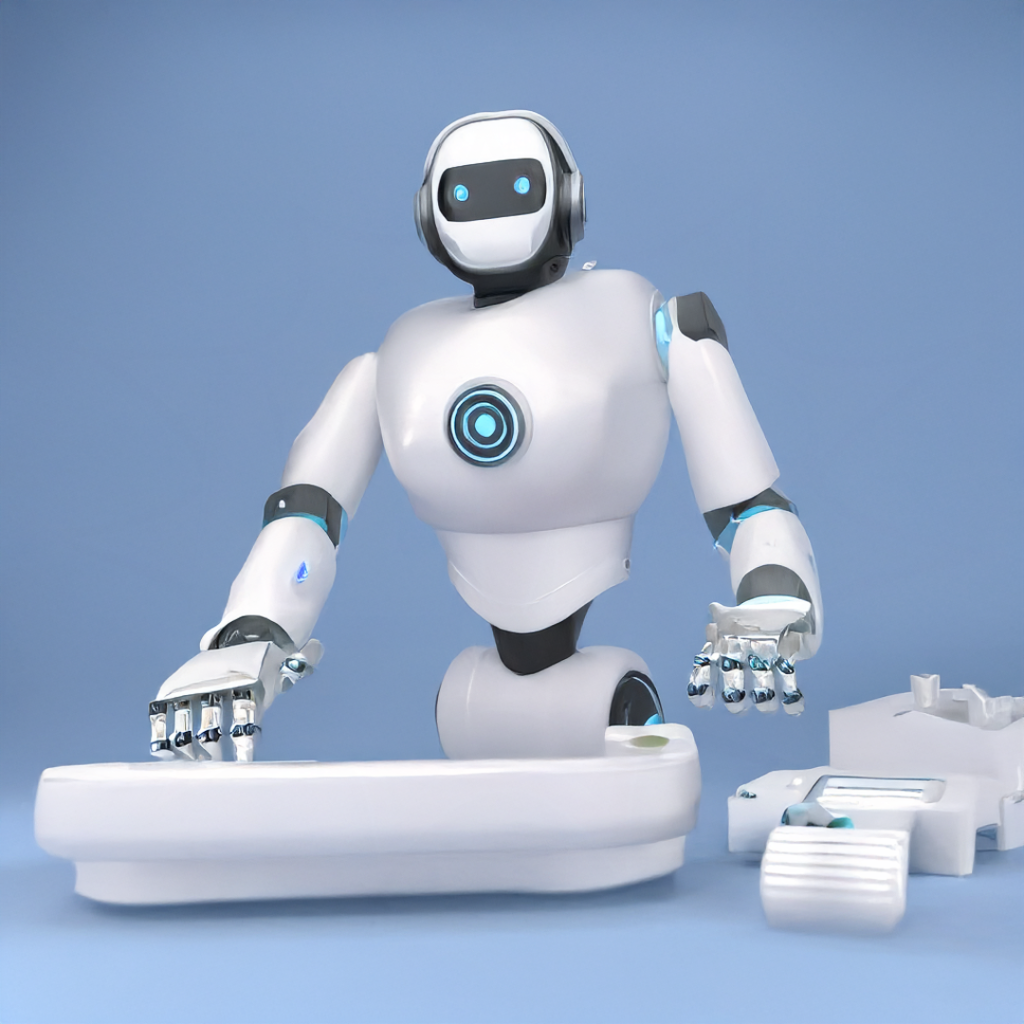
Tired of Repetitive Tasks? Say Hello to AI Automations!
In today’s fast-paced business world, efficiency is king. Many businesses find themselves bogged down by repetitive, time-consuming tasks that drain resources and valuable employee time. Imagine a world where these tasks are handled automatically, allowing your team to focus on creativity, strategy, and what truly drives your business forward. This isn’t science fiction; it’s the power of **AI automations**.
AI automation is quickly becoming a game-changer for businesses of all sizes, making complex operations simpler and more effective. It’s about using smart technology to take over the mundane, freeing up your human talent for more important work. If the idea of working smarter, not harder, appeals to you, then understanding and implementing **AI automations** is your next step. This guide will break down what AI automation is, why your business needs it, and how you can start using it to transform your operations.
What Exactly Are AI Automations?
At its heart, AI automation refers to using Artificial Intelligence (AI) to perform tasks and processes without human intervention. Think of it not as robots taking over, but as smart software that learns, adapts, and executes tasks that would typically require human input. Unlike traditional automation, which follows predefined rules, AI automation can handle more complex scenarios because it uses AI to make decisions, understand context, and even improve over time.
For example, instead of manually sorting through customer emails, an AI automation system can understand the content of each email, categorize it, and even draft a preliminary response based on its learning. It can schedule meetings, process invoices, analyze large datasets, and much more. The goal of **AI automations** is to streamline operations, reduce errors, and ultimately boost productivity by letting intelligent systems handle the grunt work.
Why Your Business Needs Business Automation with AI
The benefits of integrating **business automation with AI** are numerous and impactful, making it an essential strategy for growth and competitiveness:
* **Boosted Efficiency**: AI systems can work 24/7 without breaks, performing tasks much faster than humans. This means more work gets done in less time, drastically improving overall operational efficiency.
* **Enhanced Accuracy**: Human error is inevitable. AI automation, however, performs tasks with consistent precision, significantly reducing mistakes in data entry, calculations, and repetitive processes. This leads to higher quality output and fewer costly corrections.
* **Significant Cost Savings**: By automating tasks, businesses can reduce labor costs associated with repetitive work. It also optimizes resource allocation, as employees can be shifted to higher-value activities that AI cannot perform.
* **Improved Employee Morale**: When employees are freed from tedious, repetitive tasks, they can focus on more engaging, creative, and strategic work. This leads to higher job satisfaction, increased engagement, and better retention rates.
* **Scalability**: As your business grows, **business automation with AI** allows you to scale operations without proportionally increasing your workforce. AI systems can handle increased volumes of work seamlessly, supporting your expansion efforts efficiently.
* **Better Data Insights**: AI can process and analyze vast amounts of data much quicker than humans, identifying trends and insights that can inform better business decisions and strategies.
Key Areas Where AI Automation Shines
**AI task automation** isn’t just a concept; it’s being applied across various business functions, delivering tangible results. Here are some prime examples:
* **Customer Service**: AI-powered chatbots and virtual assistants can handle common customer queries, provide instant support, and even guide customers through processes. This frees up human agents to deal with more complex issues, improving response times and customer satisfaction.
* **Marketing & Sales**: AI automates personalized email campaigns, analyzes customer behavior to recommend products, and qualifies leads based on engagement. This streamlines the sales funnel, making marketing efforts more targeted and effective.
* **Human Resources (HR)**: From automating resume screening and scheduling interviews to managing onboarding paperwork and payroll, AI can significantly reduce the administrative burden on HR departments, allowing them to focus on talent development and employee experience.
* **Finance & Accounting**: AI can automate invoice processing, expense reporting, fraud detection, and financial forecasting. This ensures accuracy, compliance, and provides deeper financial insights.
* **IT Operations**: Monitoring system performance, predicting potential issues, and automating routine maintenance tasks are all areas where **AI task automation** can drastically improve IT efficiency and reliability.
* **Data Management**: Automating data entry, cleaning, and analysis helps maintain data integrity and provides timely, accurate information for decision-making.
Choosing the Right Workflow Automation Tools
With the growing popularity of AI, many **workflow automation tools** have emerged. Selecting the right ones for your business is crucial. It’s not about picking the most expensive or feature-rich tool, but finding what best fits your specific needs and budget. Here’s what to consider:
* **Identify Your Core Needs**: What specific tasks or workflows do you want to automate? List the pain points in your current processes.
* **Ease of Use**: Look for tools with intuitive interfaces that your team can learn quickly. A steep learning curve can hinder adoption.
* **Integration Capabilities**: Your chosen tools should integrate smoothly with your existing software (CRM, ERP, email platforms, etc.) to create a seamless ecosystem.
* **Scalability**: Ensure the tool can grow with your business. You don’t want to outgrow your automation solution too quickly.
* **Cost vs. Value**: Evaluate pricing models and compare them against the potential ROI. Consider free trials or demo versions to test before committing.
* **Security**: Since you’ll be handling sensitive business data, robust security features are non-negotiable.
Some common types of **workflow automation tools** include Robotic Process Automation (RPA) platforms, business process management (BPM) suites with AI capabilities, and specialized AI services for specific tasks like natural language processing (NLP) or predictive analytics.
Getting Started with AI Task Automation: A Simple Roadmap
Implementing **AI task automation** might seem daunting, but it doesn’t have to be. Start small and grow incrementally. Here’s a straightforward approach:
1. **Identify Low-Hanging Fruit**: Look for the most repetitive, time-consuming, and error-prone tasks in your business. These are often the best candidates for initial automation.
2. **Start with a Pilot Project**: Don’t try to automate everything at once. Choose one specific task or workflow to automate as a pilot. This allows you to learn, refine, and demonstrate value without disrupting your entire operation.
3. **Choose the Right Tool(s)**: Based on your pilot project, select the appropriate **workflow automation tools**. Remember to prioritize ease of use and integration.
4. **Train Your Team**: Involve your employees early. Educate them on what AI automation means for their roles – emphasizing that it frees them for more engaging work, rather than replacing them.
5. **Monitor and Refine**: Once implemented, track the performance of your automated tasks. Are they achieving the desired efficiency? Are there any bottlenecks? Use feedback to continuously improve and optimize your automation processes.
6. **Scale Gradually**: Once your pilot project is successful, identify other areas and gradually expand your **AI task automation** efforts across your organization.
Embrace the Future of Work
The landscape of business is evolving rapidly, and **AI automations** are at the forefront of this change. They are no longer a luxury for large enterprises but an accessible necessity for any business looking to stay competitive, efficient, and innovative. Embracing **business automation with AI** means creating a workplace where human potential is maximized, operations run smoothly, and growth is consistently supported. By leveraging the right **workflow automation tools** and strategically applying **AI task automation**, you can unlock new levels of productivity and empower your team to focus on what truly matters. The future of work is automated, intelligent, and more human-centric than ever before. Don’t get left behind—start exploring the potential of AI automation for your business today.
Frequently Asked Questions
Is AI automation only for big companies?
Absolutely not! While large corporations have adopted AI automation, many accessible and scalable **workflow automation tools** are now available for small and medium-sized businesses. The benefits of increased efficiency and cost savings apply equally, if not more, to smaller operations looking to maximize resources.
Will AI automation replace human jobs?
The primary goal of **AI automations** is to augment human capabilities, not replace them. AI takes over repetitive, rule-based tasks, freeing employees to focus on more strategic, creative, and human-centric roles that require critical thinking, empathy, and complex problem-solving. It transforms jobs rather than eliminates them, leading to a more engaging work environment.
How difficult is it to implement AI automations?
The difficulty varies depending on the complexity of the tasks and the chosen tools. However, many modern **workflow automation tools** are designed with user-friendly interfaces that require minimal technical expertise. Starting with small, well-defined pilot projects (as discussed in the ‘Getting Started’ section) can make the implementation process much smoother and less intimidating.
What’s the difference between automation and AI automation?
Traditional automation follows predefined rules and scripts; it’s good for predictable tasks. **AI automations**, on the other hand, leverage Artificial Intelligence to learn, adapt, and make decisions in real-time. This allows them to handle more complex, variable tasks that require understanding, context, and even ‘intelligence,’ going beyond simple rule-following.
Conclusion
Embracing **AI automations** is no longer a choice but a strategic imperative for businesses aiming for sustainable growth and efficiency. From streamlining customer service to optimizing internal operations, **business automation with AI** offers unprecedented opportunities to innovate and excel. By carefully selecting **workflow automation tools** and implementing **AI task automation** gradually, your business can unlock significant potential, empower employees, and achieve new levels of productivity. Start your automation journey today and transform the way you work.